
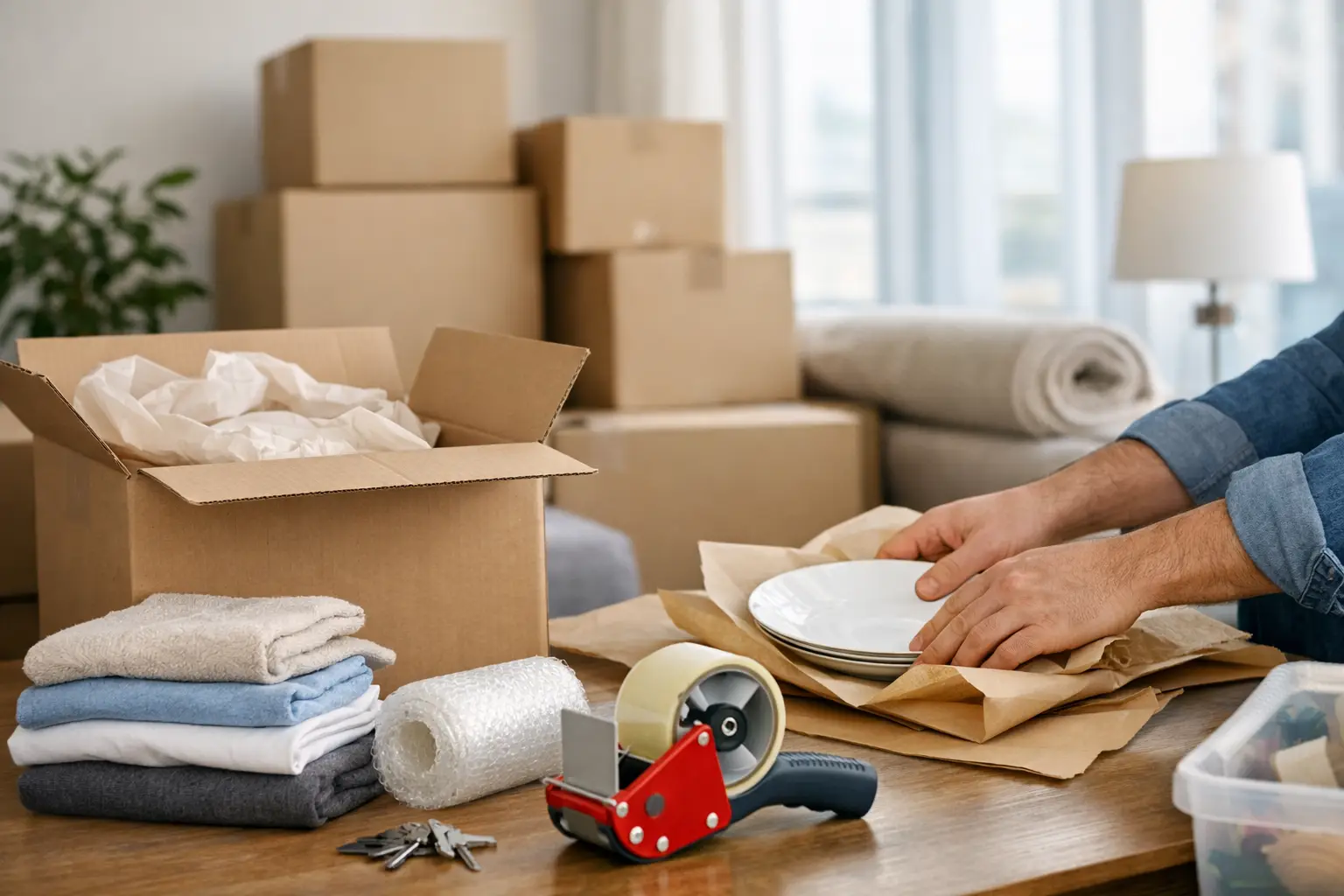
If you have ever reached moving day with half a kitchen still in cupboards and no idea where the kettle box has gone, you already know why good packing matters. The best packing tips for moving house are not about cramming everything into boxes as quickly as possible. They are about protecting your belongings, keeping the move organised, and making the first day in your new home much easier.
Packing tends to take longer than most people expect. A three-bedroom house can contain far more cupboards, loft items and forgotten drawers than you realise until you start opening them all. That is why the most useful approach is to pack with a plan, not just with speed.
Packing tips for moving house start with the right materials
One of the most common mistakes is using whatever boxes happen to be available. Supermarket boxes can help in a pinch, but they are not always the right size, and weaker cardboard is more likely to collapse when stacked. Strong, purpose-made moving boxes give better protection and are easier to carry safely.
It helps to use a mix of box sizes rather than one size for everything. Smaller boxes are better for books, tools and heavier kitchen items. Larger boxes work better for bedding, cushions and lighter belongings. If a box is too large, there is a temptation to overfill it, which makes it harder to lift and more likely to split.
Good packing tape, bubble wrap, packing paper and marker pens are not extras. They are basic essentials. Bin bags are useful for soft items and quick wardrobe clearing, but they should not replace proper packing materials for most household belongings. If you are moving valuable or fragile items, the quality of the materials matters even more.
Start earlier than you think you need to
Most people underestimate the time required to pack properly. Leaving it until the final few days often leads to rushed decisions, poor labelling and unnecessary breakages. A better approach is to begin with the rooms and items you use least.
Lofts, garages, spare rooms, bookcases and seasonal cupboards are usually the easiest place to start. This builds momentum without disrupting everyday life too much. Then, as moving day gets closer, you can work through the rooms you use more regularly.
If you have children, work commitments or a long-distance move ahead, giving yourself extra time is especially important. Packing in short, consistent sessions is usually more manageable than trying to tackle the whole house in one exhausting weekend.
Declutter before you pack
There is little value in paying to move things you no longer need, use or want. Packing is the ideal time to reduce what comes with you. That might mean donating usable items, recycling broken ones or disposing of things that have simply been taking up space.
This is not about being ruthless for the sake of it. It is about making the move more efficient. Fewer items mean fewer boxes, less lifting and less unpacking at the other end. It can also reduce transport space requirements and simplify storage if you need that between properties.
Wardrobes, kitchen cupboards and garages usually hold the biggest opportunities for this. If you have not used something for years and had forgotten you owned it, it may not need to travel to the next house.
Pack room by room, not randomly
A house packed in a hurry often ends up with mixed boxes full of unrelated items. That may seem harmless at the time, but it creates confusion later. Unpacking is much easier when each box belongs clearly to one room and contains similar items.
Keep bedrooms separate. Keep bathroom items together. Pack kitchenware with kitchenware. It sounds obvious, but once the move gathers pace, it is easy to slip into filling half-empty boxes with whatever is nearby. That usually creates more work later.
A clear system also helps your removals team place boxes in the correct rooms on arrival. That reduces unnecessary handling and saves time on moving day.
How to label boxes so they are actually useful
Labelling should do more than state the room. A box marked simply “kitchen” may not tell you enough when you are looking for essentials on your first evening. Better labels include the room, a short description of contents, and whether the box is fragile.
Write on at least two sides of the box, not just the top. Once boxes are stacked, side labels are far easier to spot. If you want to be more organised, use a numbering system with a simple written list of what is in each box. That can be particularly useful for larger moves or if some items are going into storage.
It is also worth marking priority boxes clearly. Bedding, chargers, toiletries, basic cookware, children’s essentials and pet supplies should be easy to find straight away.
Protect fragile items properly
Fragile packing is where rushed moves often come unstuck. Glasses, plates, ornaments, mirrors and electronics all need proper cushioning and sensible placement inside the box. Empty space is the enemy here. If contents can shift during transport, the risk of damage increases.
Wrap each fragile item individually. Use packing paper or bubble wrap, and fill gaps with additional padding so items stay secure. Plates are often safer packed vertically rather than laid flat, and heavier fragile items should go at the bottom with lighter ones above.
Do not mark a box “fragile” and assume that alone will protect the contents. The label helps, but the packing itself is what makes the real difference. If you are concerned about antiques, artwork or specialist equipment, professional packing support can be the safest option.
Heavy items need smaller boxes
Books are the classic example. They may not look particularly awkward on a shelf, but once boxed, they become surprisingly heavy. The same applies to files, tools, canned food and some electrical items.
Using smaller boxes for heavy belongings protects both the items and the people lifting them. A large box full of books is difficult to carry safely and puts strain on the base of the box. A smaller, well-sealed carton is far more manageable.
The rule is simple: heavy items in small boxes, light items in larger ones. Keeping weights sensible across all boxes makes loading and unloading more efficient and reduces the risk of injury.
Don’t forget the essentials box
One of the most practical packing tips for moving house is to prepare a separate box or bag for the first 24 hours. This should stay with you rather than disappear into the removal vehicle among everything else.
Include the items you will almost certainly need straight away: kettle, mugs, tea or coffee, phone chargers, medication, toiletries, a change of clothes, basic cleaning supplies, important documents and any overnight items for children. If you are moving with pets, pack food, bowls and anything that helps keep them settled.
This is a simple step, but it can make the first evening in your new home feel far more manageable.
Be realistic about furniture and awkward items
Not everything should be packed at the last minute, and not everything fits easily through doors, hallways or staircases. Furniture may need dismantling in advance, especially beds, wardrobes and dining tables. If this is left too late, it can slow the whole move down.
Keep screws, bolts and fittings in labelled bags and tape them securely to the relevant item where possible. Take a quick photo of anything complicated before taking it apart. That saves time when you need to reassemble it later.
For large or unusually shaped items, a bit of forward planning matters. Sofas, American-style fridge freezers and office desks can all present access issues depending on the property. Experienced removals teams will usually assess this in advance, but if you are packing yourself, it is worth thinking beyond the box stage.
When professional packing support is worth it
There is a point where doing it all yourself is not always the best use of your time. If you are moving a larger family home, working to a tight deadline, handling delicate items or coordinating storage as well as a move, professional packing can remove a great deal of pressure.
It is not only about convenience. It can also mean better protection for fragile belongings, faster preparation and a more orderly move overall. For many households, the trade-off comes down to time versus cost. If taking time off work, managing children and packing an entire property feels unrealistic, extra support may be the practical choice.
At Phoenix Rising Removals and Storage, this is often where customers find the biggest relief – knowing the packing is being handled carefully, efficiently and with the right materials from the start.
Keep the final day as clear as possible
The day before the move should not be spent still trying to box up half the house. Ideally, by that point, everything should be packed apart from the absolute essentials you are using overnight. That leaves time for final checks, defrosting the freezer if needed, and making sure access is clear for loading.
It also helps to keep pathways open and group packed boxes sensibly. That allows the move to begin more efficiently and reduces the chance of items being overlooked in cupboards, sheds or the loft.
A well-packed house does more than protect your belongings. It lowers stress, helps the day run to plan and makes settling into your new place far easier. Good preparation rarely feels exciting while you are doing it, but when the right box appears exactly when you need it, it proves its worth.