
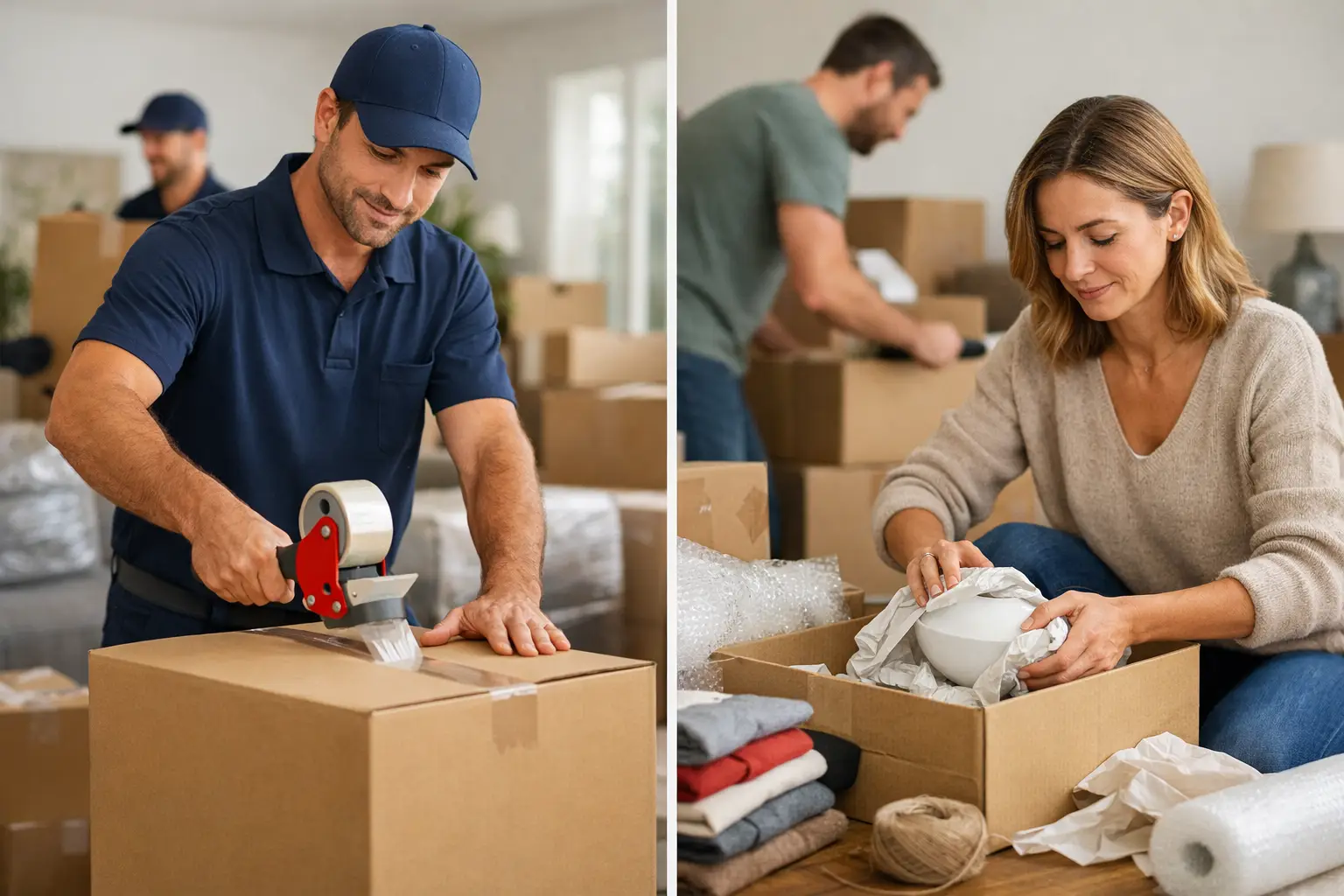
The difference between a manageable move and a draining one often comes down to the packing. When people weigh up packing service vs self packing, they are usually trying to balance three things at once – cost, time and peace of mind. The right choice depends on what you are moving, how quickly you need to be ready, and how much risk you are comfortable taking with your belongings.
Packing is often treated as the part you can simply squeeze in around work, school runs and everything else. In practice, it is one of the most time-sensitive parts of any move. If it slips, the whole moving day becomes harder. Boxes are unfinished, fragile items are rushed, and furniture ends up being dismantled later than planned.
Packing service vs self packing – what is the real difference?
At the simplest level, self packing means you source your own materials, sort your belongings, wrap everything, label the boxes and make sure they are ready for loading. A professional packing service means experienced movers do some or all of that for you, using suitable materials and packing methods for different items.
The real difference is not just who puts items in boxes. It is who carries the responsibility for preparing your belongings properly for transport. That includes protecting fragile items, packing efficiently so nothing shifts in transit, and making sure boxes are not too heavy, too weak or poorly labelled.
For some households, self packing works perfectly well. If you are moving from a smaller property, have plenty of time, and are organised well in advance, it can be a sensible way to keep costs down. For larger homes, family moves, business relocations or moves with tight timescales, professional packing often becomes less of a luxury and more of a practical safeguard.
When self packing makes sense
Self packing can be a good option if your move is relatively straightforward. A one-bedroom flat with limited furniture is very different from a five-bedroom family home with loft contents, garden equipment and years of accumulated belongings.
It also suits people who want complete control over the process. Some prefer to sort every cupboard themselves, decide exactly what gets packed when, and use the move as a chance to declutter properly. If that sounds like you, packing your own boxes may feel more efficient than explaining your preferences to someone else.
Cost is another clear reason people choose this route. On paper, self packing looks cheaper because you are not paying for labour. But it only stays cheaper if you pack well, avoid breakages, buy the right materials first time and do not lose days of work or weekends trying to catch up.
The hidden challenge is that most people underestimate how long packing takes. Kitchens alone can absorb far more time than expected. Books are heavier than they look, wardrobes take longer to empty than planned, and garages are rarely as simple as they seem.
Where professional packing earns its value
A packing service is often most useful where time, complexity or fragility are major factors. That includes family homes, long-distance moves, office moves, last-minute relocations and properties with a high volume of delicate or awkward items.
Professional packers work methodically. They know how to wrap glassware, secure crockery, protect artwork, prepare electronics and pack boxes so they can be stacked safely in the vehicle. That level of experience matters because damage often happens before the van even leaves the driveway. Poorly packed boxes collapse, contents shift, and items knock together in transit.
There is also the physical side of the job. Packing is repetitive, tiring work. It involves lifting, bending, carrying and a lot of decision-making under pressure. If you are already dealing with estate agents, solicitors, tenancy deadlines, work commitments or family logistics, handing over the packing can remove a substantial part of the strain.
For businesses, the case is often even clearer. Office moves need coordination, labelled systems and efficient packing so equipment, documents and furniture can be relocated with minimal disruption. A disorganised packing job can delay reopening and create avoidable confusion once everything arrives.
Cost versus value
This is where the packing service vs self packing question becomes more nuanced. Self packing can reduce upfront spend, but the cheapest route is not always the best-value route.
If you pack yourself, your total cost includes boxes, tape, wrapping materials, markers and protective supplies, along with your time. If you need extra days off work, childcare support, or a larger removal slot because nothing is ready on time, those costs start to add up. There is also the potential cost of replacing damaged items if they were not packed securely.
A professional packing service adds to the removals quote, but it can reduce the risk of delays, damage and last-minute problems. It may also shorten the overall move because the loading process is quicker when everything is packed correctly and labelled clearly.
The better question is not simply which option costs less. It is which option gives you the most reliable result for your circumstances.
Time pressure changes the decision
If you have several weeks to prepare, self packing is more realistic. You can tackle one room at a time, order proper materials, and leave essentials until last. Even then, it requires discipline. Many people start well and lose momentum once daily life gets in the way.
If your timescale is tighter, professional packing becomes far more attractive. Completion dates change. Tenancy deadlines move quickly. Chains create uncertainty. In those situations, having a team that can pack efficiently and systematically can protect the move from becoming rushed and disorganised.
This matters even more for long-distance moves. If your removal team is travelling a considerable distance, everything needs to be ready at the agreed time. Delays at the packing stage can affect the whole schedule.
Fragile, valuable and awkward items
Some belongings are not forgiving. Glassware, mirrors, artwork, televisions, computers, ornaments and specialist equipment all need more than a few layers of spare newspaper and hope.
Professional packers use methods that reflect the item, not just the box. That means the right wrapping, sensible weight distribution, internal protection and labelling that helps the unloading team know what needs special care.
This is one of the strongest arguments for a full or partial packing service. Even if you prefer to pack clothing, books and general household contents yourself, it can still make sense to bring in professionals for fragile or high-value items. That middle-ground option is often the most practical for people who want to keep some control over cost while reducing risk where it matters most.
A hybrid approach often works best
Packing does not have to be all or nothing. Many moves are best handled with a split approach.
You might pack personal items, everyday clothes and non-breakables yourself, then ask the removals company to pack the kitchen, ornaments, electronics and artwork. You might also choose a fragile-pack service only, or request help with the rooms you know will be hardest to finish.
This can be especially useful for families and older movers. It reduces the physical load without removing your involvement entirely. It also helps if you want to sort private paperwork or sentimental items yourself while leaving the technical side of packing to experienced hands.
A company such as Phoenix Rising Removals and Storage can usually advise on which level of packing support is worth having for the size and type of move involved.
How to decide with confidence
If you are still unsure, ask yourself a few straightforward questions. How much time do you genuinely have before moving day? How many fragile or high-value items are involved? Are you moving a small, simple property or a busy family home? Do you feel confident sourcing proper packing materials and using them well? And if the answer is no, what would the cost of mistakes look like?
It also helps to think about how you want to feel the day before the move. If you would rather spend that time checking final details, looking after children, managing keys and making sure everything is calm, a packing service may be the better choice. If you are organised, ahead of schedule and happy doing it yourself, self packing can still work very well.
The best decision is the one that matches the reality of your move, not the ideal version of it. Plenty of people plan to self pack and then find themselves finishing boxes at midnight. Others assume they need a full packing service when a partial service would be enough.
A move rarely feels easier because you tried to save effort in the wrong place. If packing is likely to create stress, delay or risk, getting the right level of support is often the most practical decision you can make.