
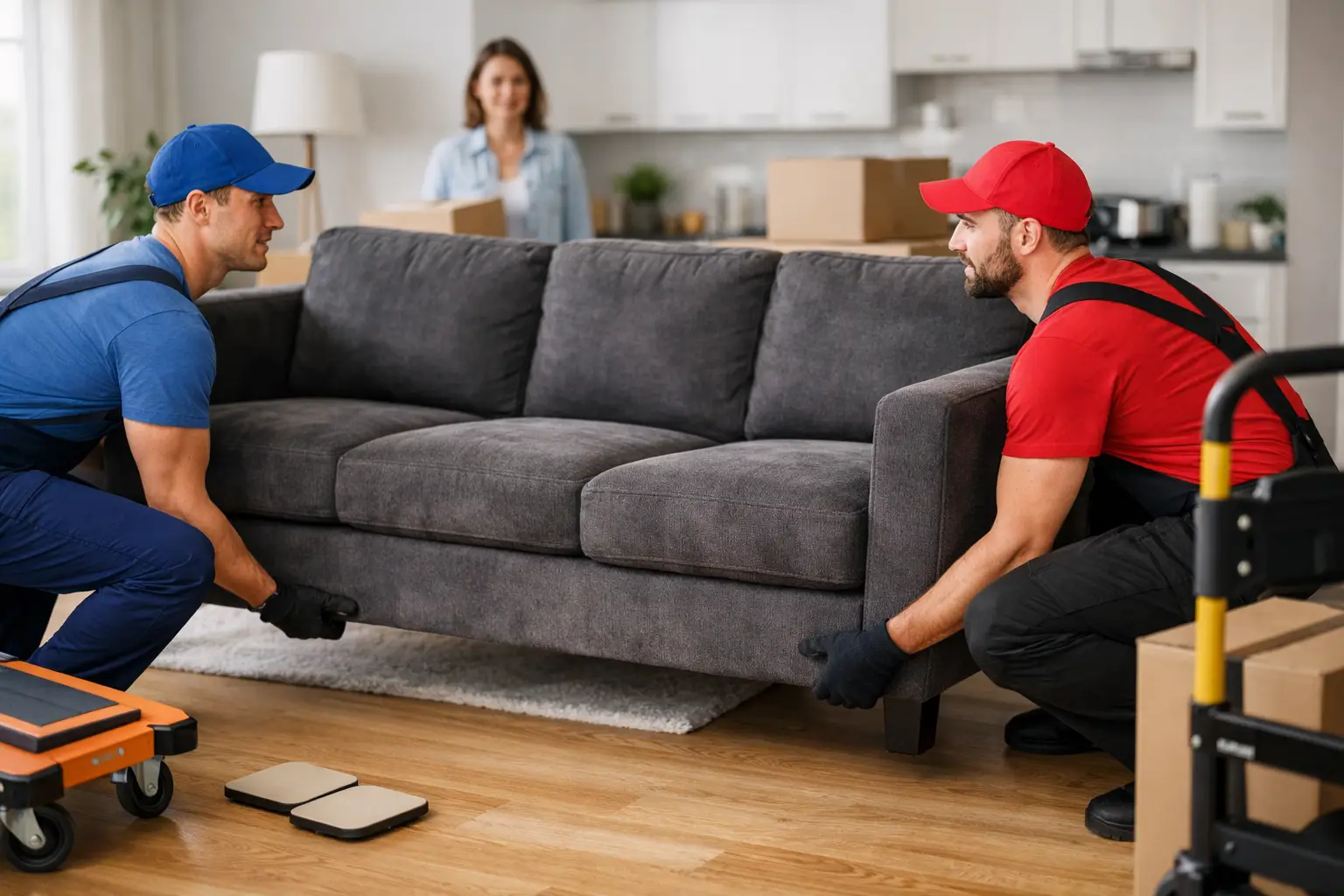
That moment when a wardrobe will not clear the landing corner or a sofa feels twice as heavy as expected is usually when people start searching for how to move heavy furniture. The challenge is not just strength. It is planning, safe lifting, protecting floors and walls, and knowing when a job is no longer sensible to do alone.
Moving large furniture is one of the easiest ways to damage a property or cause an injury during a house move. A strained back, trapped fingers, scratched banisters, or a cracked table leg can quickly turn moving day into a more stressful and expensive job. A careful approach saves time and usually prevents the problems that cause delays.
How to move heavy furniture without injury
The safest way to handle heavy furniture starts before anything is lifted. Measure the item, then measure doorways, staircases, hallways and tight corners. Include handles, feet and any parts that stick out. Many people only check the width and forget the height needed to tilt an item through a space.
It also helps to clear the route fully. Remove rugs, shoes, boxes and small furniture from walkways. Prop doors open where possible and protect vulnerable areas such as painted walls, stair rails and hard flooring. If the route is narrow, decide in advance who is leading and who is following so there is no confusion halfway through a staircase.
Good lifting technique matters more than brute force. Keep the load close to your body, bend through your knees rather than your back, and avoid twisting while carrying. If you need to turn, move your feet instead of rotating your spine under load. Slow, controlled movement is safer than trying to rush a bulky item out of the room.
Just as important, do not try to prove a point. If something feels unstable, too heavy, or awkwardly balanced, stop and reassess. Heavy furniture often becomes dangerous because of its shape rather than its weight alone.
Use the right equipment for the job
The right tools can make a difficult move far more manageable. Furniture sliders are useful on wood, laminate and some carpeted floors, especially for wardrobes, bookcases and sideboards. A sack barrow or dolly can help with items that can be kept upright and secured properly. Lifting straps can reduce strain, but only if everyone using them understands how to balance the load.
Protective materials also matter. Thick moving blankets, cardboard sheets and floor coverings help prevent scuffs and chips during the move. Tape can hold blankets in place, but avoid taping directly onto delicate finishes where adhesive may mark the surface.
There is a trade-off here. Equipment helps, but only when used correctly. A trolley on an uneven path or poorly fitted straps on a staircase can make control worse rather than better. If you are not confident with a particular tool, a simpler method or professional support is often the safer choice.
Disassemble where you can
The easiest heavy item to move is usually the one you have reduced into smaller parts. Remove drawers from chests, shelves from cabinets, and legs from tables if they are designed to come off. Bed frames, large desks and some wardrobes are far easier to handle once dismantled.
Keep fixings in labelled bags and tape them to the relevant item or place them in a clearly marked box. Take a few quick photos before disassembly if the furniture is complex. This saves time when reassembling at the other end and reduces the risk of missing parts.
Not every item should be taken apart. Some older furniture becomes less stable once dismantled, and certain flat-pack pieces do not always survive multiple rebuilds. In those cases, handling by experienced movers may be the better option.
Room-by-room challenges
Ground-floor moves are usually simpler, but stairs change everything. Weight shifts differently on staircases, and visibility is often limited. One person should direct the movement clearly, especially when turning on a landing. If the item blocks the person at the lower end from seeing their footing, the risk rises quickly.
Sofas are a good example of why shape matters. They are often not the heaviest items in a house, but they are awkward, deep and difficult to pivot. Sometimes removing the front door from its hinges or taking off sofa feet creates enough extra clearance to avoid forcing it through.
Wardrobes and fridge freezers bring different issues. Tall items can become unstable when tilted too far, and appliances may need special care to protect internal components. Washing machines are especially dense and hard to grip. If an item contains glass, mirrored panels or stone tops, the handling plan should be more cautious from the start.
Protecting floors, walls and furniture
Property damage often happens in small contact points – a chair leg against a skirting board, a chest corner against plaster, a dragged base across timber flooring. Wrapping vulnerable edges and padding tight corners can prevent most of this.
If you need to set an item down during the move, choose the place in advance. Resting heavy furniture on weak points, such as delicate legs or trims, can cause damage even before the piece reaches the van. Aim to lower furniture onto flat, stable surfaces with enough room to reposition safely.
Dragging furniture should be avoided where possible. Even with sliders, dragging can stress joints and frames if the item is not designed for that kind of force. Lifting slightly and moving in controlled stages is slower, but usually better for both the item and the property.
When to stop doing it yourself
There is nothing wrong with handling smaller parts of a move yourself, but some jobs call for trained help. If an item is extremely heavy, has to go up or down multiple flights of stairs, or needs manoeuvring through narrow period properties, the margin for error gets smaller. The same applies if time is tight and you cannot afford delays on moving day.
Professional removals teams bring more than extra pairs of hands. They bring experience, lifting technique, the right protective materials, suitable vehicles, and insurance cover for the work being carried out. That combination often matters most when moving pianos, large wardrobes, commercial equipment, solid wood dining tables, safes or expensive office furniture.
For households and businesses alike, there is also the question of continuity. A home move can be thrown off by one damaged item or one injury. In an office move, poor handling can delay operations, damage equipment and create unnecessary disruption. In both cases, practical support from an experienced removals company reduces risk in a very direct way.
How to move heavy furniture on moving day
Start with the largest items first, while access routes are still clear and energy levels are higher. Load heavier pieces into the vehicle in a way that keeps weight balanced and prevents movement in transit. Items should be secured properly, not wedged in and hoped for the best.
If furniture is going into storage, think beyond transport. Clean, dry wrapping and careful stacking matter because heavy pieces can damage lighter items over time. Storage works best when there is a clear inventory and enough space to access key items without unpacking the whole unit.
For anyone planning a full house or office move, this is often the point where professional support pays for itself. Companies such as Phoenix Rising Removals and Storage can manage not only the lifting and transport, but also packing, storage and the coordination that keeps the move on schedule.
A practical way to decide
If you can disassemble the item, protect the route, use the correct equipment and move it with enough capable help, doing it yourself may be perfectly reasonable. If the item is awkward, valuable, unusually heavy, or the route is tight and complex, the safer answer is often to bring in professionals.
Heavy furniture does not reward guesswork. A calm plan, the right handling method and a realistic view of your limits will protect your belongings, your property and your back. If a piece feels like it could become a problem, treat that instinct as useful information rather than something to ignore.