
A fridge that has not been prepared properly can leak across a van floor. A washing machine moved with water still inside can damage its own drum in transit. Heavy appliances are awkward, unforgiving and easy to underestimate, which is why the best way to move appliances starts long before lifting begins.
For most households and businesses, the safest approach is a planned one. That means disconnecting appliances correctly, protecting vulnerable parts, using the right equipment and knowing when a job is no longer sensible to do alone. A cooker, fridge freezer or tumble dryer may look straightforward to shift, but weight distribution, access restrictions and internal moving parts can quickly turn a simple task into a costly problem.
What is the best way to move appliances?
The best way to move appliances is to prepare them fully, move them upright where possible, protect them with the right materials and use suitable lifting equipment rather than relying on strength alone. In practice, that process varies depending on the appliance, the property layout and how far it is travelling.
A ground-floor move with clear access is very different from taking a large American-style fridge out of a narrow terrace or moving office kitchen equipment down a stairwell. The method needs to match the risk. Sometimes that means using appliance trolleys, straps and protective blankets. Sometimes it means arranging professional removals support because the weight, access or value of the item makes a DIY move a false economy.
Prepare appliances before moving day
Preparation is where most damage is prevented. If an appliance is disconnected in a rush or moved while still damp, full of water or loosely packed with shelves inside, it is much more likely to suffer knocks, leaks or internal damage.
Fridges and freezers should be emptied, defrosted and thoroughly dried in advance. This usually needs to happen at least 24 hours before the move, sometimes longer for larger units. Any shelves, drawers and loose inserts should be removed, wrapped separately and labelled so they go back in easily at the new property.
Washing machines and dishwashers need more care than many people expect. They should be drained fully, with hoses disconnected, dried and secured. If transit bolts are available for a washing machine, they should be fitted before transport to help stabilise the drum. If the original bolts have been misplaced, it is worth checking the manufacturer guidance before moving. Taking a machine without securing internal components can lead to damage that only becomes obvious once it is installed again.
Cookers, range cookers and gas appliances need a cautious approach. If disconnection involves gas fittings, a suitably qualified professional should handle that work. Electrical appliances should be unplugged safely, cables secured and any removable parts, such as oven shelves or glass trays, packed separately.
The right equipment matters more than brute force
The biggest mistake people make is trying to carry appliances by hand without proper support. Heavy items are not just difficult to lift. They are difficult to control around corners, across thresholds and on stairs.
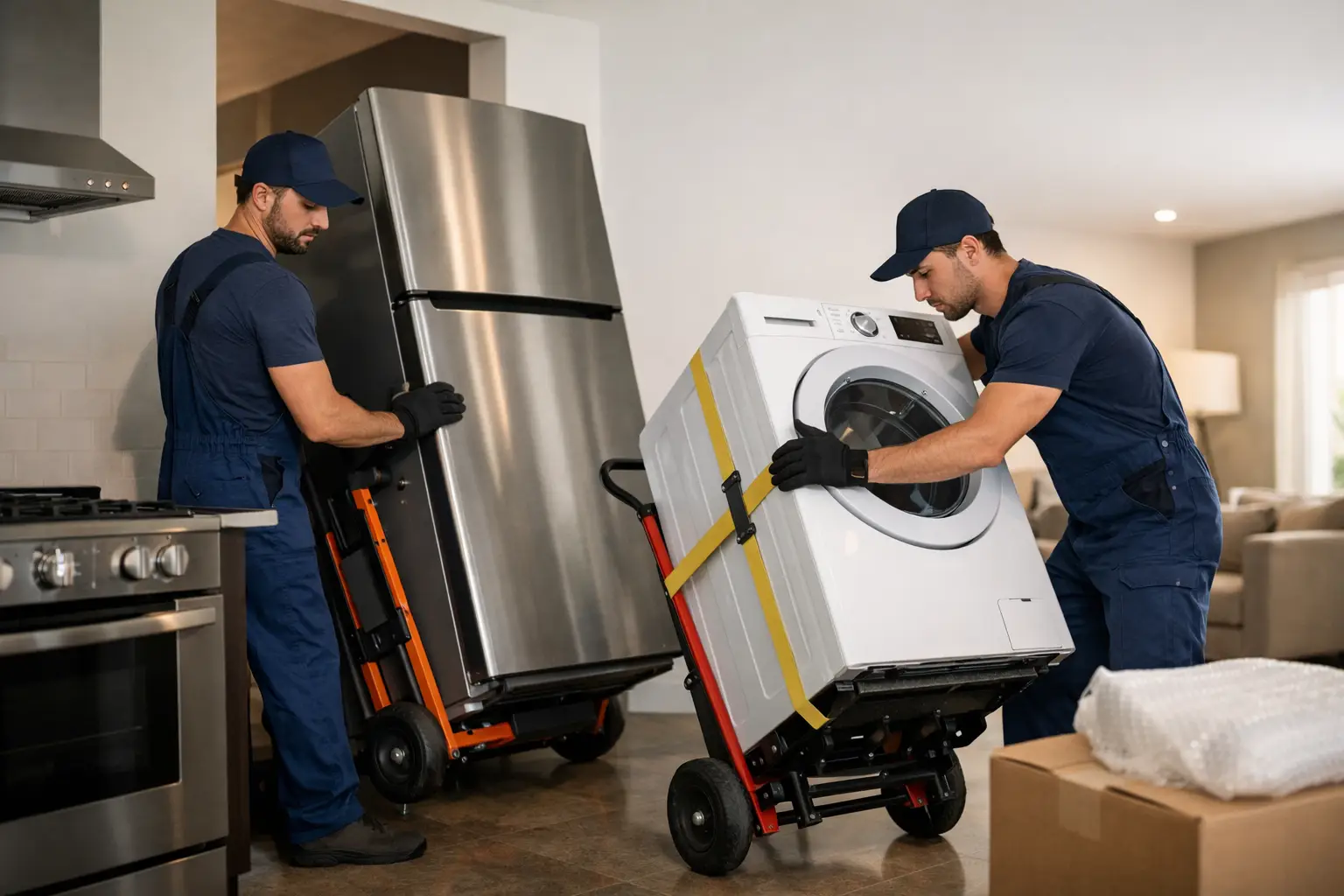
An appliance trolley or sack barrow makes a major difference because it supports the weight and improves balance. Straps help secure the load, and moving blankets protect surfaces from dents and scratches. Gloves with good grip reduce the chance of hands slipping at the wrong moment. Floor protection also matters, especially in hallways, on timber floors and at entrances where dirt, water or appliance feet can leave damage behind.
There is also a simple issue of numbers. Even with the right equipment, most large appliances should not be moved by one person. Two people may be enough for a standard washing machine on a straightforward route, but larger items or awkward access often need more planning and more hands.
Best way to move appliances without damaging them
If you want the best way to move appliances without causing cosmetic or mechanical damage, keep them upright whenever possible. This is particularly important for refrigeration appliances because tilting them too far can affect compressor oil and cooling lines. A slight angle during manoeuvring is often unavoidable, but extended transport on their side is best avoided unless manufacturer instructions say otherwise.
Doors should be taped shut or secured with straps, but not so aggressively that finishes are damaged. Corners are especially vulnerable, so padding should be fitted well before the item starts moving. It is also worth measuring everything in advance – the appliance, the door frames, the hallway width, stair turns and the vehicle opening. Many moving-day problems are not lifting problems at all. They are access problems discovered too late.
Loading order matters too. Appliances should be positioned securely in the vehicle, protected from shifting and kept separate from loose boxes or furniture that could strike them in transit. Purpose-built removal vehicles are useful here because they allow better restraint and safer loading than trying to improvise with a standard van.
Moving specific appliances safely
Not every appliance needs the same method. Fridge freezers need time to settle after transport before they are switched back on. The exact waiting time depends on the model and how it was moved, so manufacturer guidance is the safest reference point. Turning one on too quickly after transport can create avoidable problems.
Washing machines are dense and often harder to move than they look because the weight sits low and the shape is awkward to grip. They should be empty, drained and stabilised before lifting. Dishwashers bring similar issues, though they are usually lighter.
Tumble dryers are often easier to handle, but they still need proper protection to avoid denting side panels or damaging doors. Range cookers and integrated appliances can be more complex because they may involve specialist disconnection, cabinetry removal or tight clearances. In those cases, the move is less about lifting and more about safe coordination.
Office appliances can add another layer. Large water coolers, under-counter units, commercial kitchen equipment and break-room fridges often need to be moved to a fixed schedule with minimal disruption. That is where planning, labelling and careful timing become just as important as physical handling.
When DIY stops being the sensible option
There are situations where moving an appliance yourself is reasonable, and situations where it is not. A lightweight freestanding dishwasher being moved across town from a ground-floor property is one thing. A double-door fridge freezer coming out of a top-floor flat with tight communal access is something else entirely.
The deciding factors are usually weight, access, fragility, value and risk to people or property. If there are stairs, narrow turns, uneven outdoor paths, limited parking or expensive flooring involved, the margin for error gets small very quickly. The same applies if you are moving multiple appliances as part of a full house move or office relocation, where timing and vehicle space need to be managed properly.
Professional movers bring more than lifting capacity. They bring experience, protective materials, handling equipment, insured service and vehicles designed for secure transport. For customers who want to reduce risk and keep the move on schedule, that support can be the most practical option, not an added luxury. Companies such as Phoenix Rising Removals and Storage are often asked to handle exactly these high-weight, high-risk items because appliance moving is rarely just about getting something from one address to another. It is about getting it there safely and ready for the next stage.
Common mistakes that cause avoidable problems
Most appliance damage happens through haste rather than bad luck. Trying to move a fridge without defrosting it, forgetting to secure a washing machine drum, dragging an appliance across the floor or loading it loosely into a vehicle are all common examples.
Another frequent issue is reconnecting too quickly. Once an appliance has been moved, it may need time to settle, a careful level check and inspection for hose or cable issues before use. That final stage matters as much as the move itself. A machine that arrives without scratches is still a poor outcome if it leaks on first use because a hose was kinked or a fitting was rushed.
A safer move starts with proper planning
If you are comparing options, the best way to move appliances is usually the method that removes guesswork. Plan early, measure properly, disconnect carefully and do not rely on strength to solve a handling problem. The heavier and more awkward the appliance, the more valuable good equipment and experienced help become.
A calm, organised move protects more than the appliance. It protects your property, your timetable and the people doing the lifting. When that is the priority, every step tends to go more smoothly.