
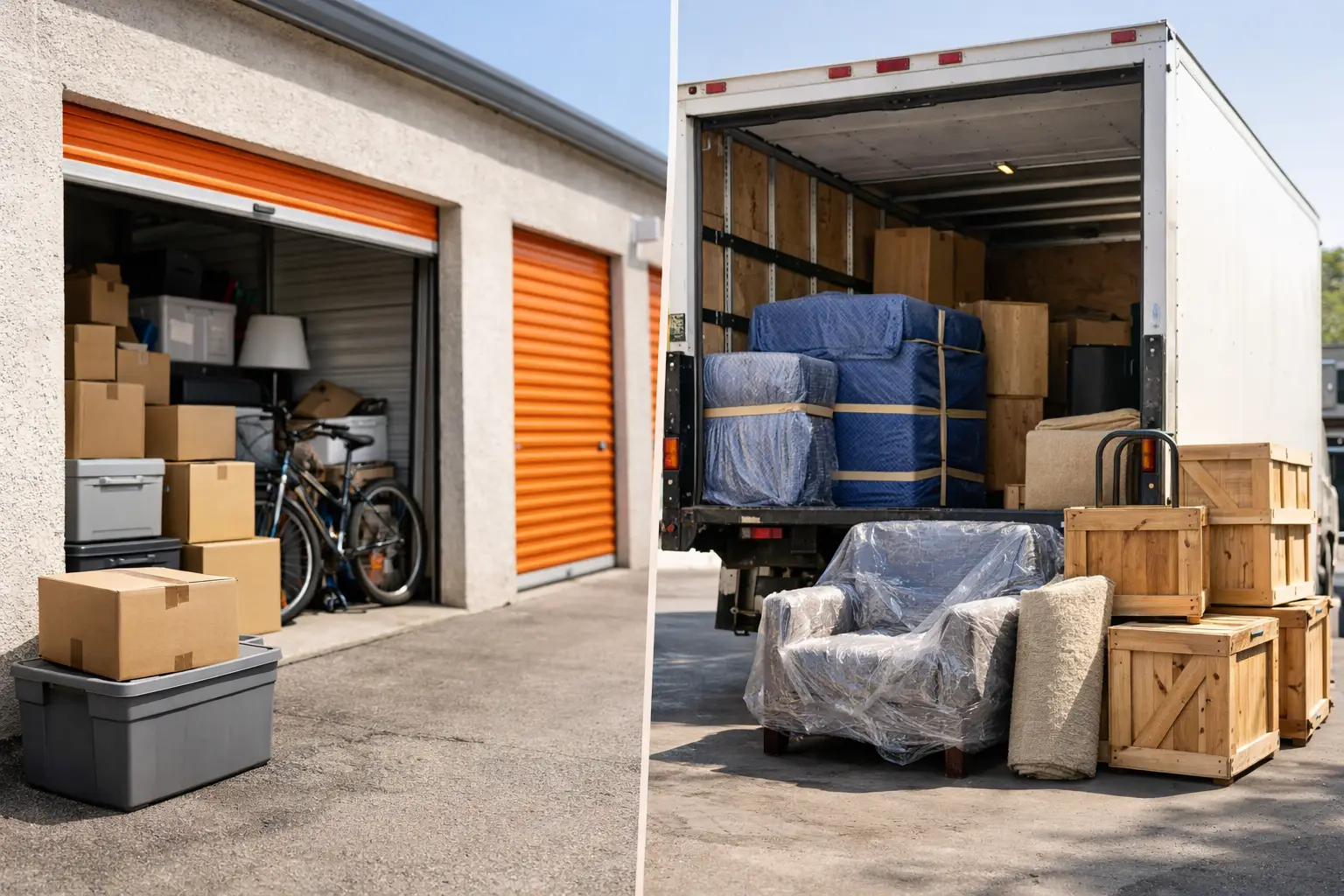
A house sale completes before your new keys are ready. Your office lease ends before the refit is finished. Or perhaps you simply need to clear a room while work is carried out. In each case, storage units vs removal storage is a practical choice that can affect the cost, effort and timing of your move.
Both options can keep possessions secure, but they work in different ways. A self-storage unit gives you direct access to a space you rent and fill yourself. Removal storage is managed as part of a removals service: your belongings are collected, protected, stored in a secure facility and delivered when you are ready. The right option depends less on which is universally better and more on how often you need access, how much lifting and transport you can take on, and how fixed your dates are.
What is a self-storage unit?
A self-storage unit is a private, rented room or container at a storage site. You choose a size, take your belongings there and usually hold the key or access code. Many facilities offer access during set hours, with some providing extended or 24-hour entry.
This can suit people who expect to visit their belongings regularly. For example, a homeowner decluttering before viewings may want to retrieve seasonal items, paperwork or furniture as needed. A small business may use a unit for stock, event materials or archive boxes that staff need to collect at short notice.
The responsibility for getting items to and from the unit usually sits with you. That can mean hiring a van, arranging help with heavy furniture, carrying items through corridors or lifts, and making several trips. It also means deciding how to load the unit safely so that items are protected and can be reached without unloading everything in front of them.
What is removal storage?
Removal storage is designed for possessions that need to be put away safely during a move, renovation, downsizing period or business relocation. A removals team collects the items from your property, loads them into purpose-built vehicles and places them into secure storage. When your new property, office or delivery date is confirmed, the same service can bring everything back.
Depending on the provider and the storage arrangement, items may be stored in dedicated wooden containers, sealed units or a managed warehouse space. The key point is that it is not normally intended for frequent walk-in access. If you need something from storage, access is usually arranged in advance and may involve retrieving the relevant container or items.
For many households, this is the lower-effort option. Large furniture, boxed belongings and fragile possessions are handled by trained movers, rather than being moved repeatedly by family and friends. It can also reduce the risk of a rushed move causing damage to a sofa, dining table or staircase wall.
Storage units vs removal storage: the main differences
The clearest difference is access. With self-storage, you can generally visit when the facility is open and manage your unit yourself. With removal storage, access is arranged through the removals company. If you need to collect items every week, a storage unit is likely to be more convenient. If you do not expect to need anything until delivery, managed removal storage is often the simpler arrangement.
Transport is the next major factor. A storage unit may look cheaper at first, but the full cost can include van hire, fuel, time off work, parking, packing materials and extra help for awkward items. Removal storage includes professional collection and delivery as part of a coordinated service, although the exact quote will depend on volume, distance, handling requirements and the length of storage.
Protection also differs. A good self-storage facility will have security measures such as controlled access, CCTV and alarms, but you are responsible for packing and loading. With removal storage, a professional team can wrap furniture, use appropriate packing materials and load items in a way that supports safe transport and storage. This is particularly useful for antiques, glassware, artwork, electronics and bulky furniture.
Finally, consider the move itself. A self-storage unit creates an additional job before and after moving day. You have to move items into storage, then move them out again. Removal storage can be built around your moving schedule, allowing belongings to leave one property and arrive at the next when the timing works.
When a storage unit may be the better choice
Choose a self-storage unit when regular, independent access is your priority. It can work well if you are renovating gradually, running a small business with changing stock levels or clearing space at home without a confirmed move date.
It may also suit smaller loads that you can manage safely yourself. If you have a few boxes, books, seasonal decorations or lightweight household items, and you already have a suitable vehicle, the practical difference between the two options may be limited.
However, be realistic about the work involved. A unit on an upper floor, a poorly packed load or a weekend of repeated car journeys can quickly become more demanding than expected. Heavy appliances, wardrobes and fragile items require more care than their size alone suggests.
When removal storage is the better fit
Removal storage is usually the stronger choice when storage is part of a larger move. It is particularly helpful when completion dates change, when there is a gap between properties or when you are moving long distance and want one company to manage collection, storage and final delivery.
It can also make sense when access to your current property is difficult. Homes with narrow staircases, limited parking or several floors often benefit from a planned collection by an experienced team. For office moves, managed storage can keep desks, IT equipment, files and furniture together while the new premises are prepared, helping reduce disruption to day-to-day operations.
For families, the benefit is often peace of mind. Rather than coordinating van hire, lifting help, storage bookings and another delivery date, you have a single point of contact for the belongings you are putting aside. Phoenix Rising Removals and Storage can coordinate packing, collection, secure storage and redelivery as part of a managed move, which is useful when timing is still uncertain.
Think beyond the monthly storage price
Storage costs should be compared on a like-for-like basis. Ask whether the quote includes collection, delivery, packing materials, insurance cover, access arrangements and any minimum storage period. A low weekly or monthly unit price may not reflect the cost of transporting belongings twice, while a removal storage quote may offer better value when it replaces several separate services.
Volume matters too. An accurate survey helps avoid paying for unused space or discovering too late that your chosen unit is too small. Professional movers can assess furniture, boxes, garden equipment and other items together, then recommend an appropriate storage capacity.
Do not overlook the value of your own time. If you are working around exchange and completion, childcare, contractors or an office handover, fewer journeys and fewer separate bookings can be worth more than a small difference in the headline rate.
How to choose with confidence
Before booking, consider five practical questions:
- Will you need to access any items while they are stored?
- Can you safely transport and load everything yourself?
- Are your moving dates fixed, or could they change?
- Do you need help packing fragile or high-value belongings?
- Does the price cover every stage, including collection and redelivery?
Clear answers will usually point you in the right direction. Frequent access and a small, manageable load lean towards self-storage. A whole-house move, a delayed completion, valuable furniture or a need for professional handling lean towards removal storage.
Whichever route you choose, start by making a realistic inventory rather than guessing. Separate items you may need before moving day from those you can comfortably live without. That simple step helps you select the right amount of space, protect what matters and keep your move moving at a manageable pace.