
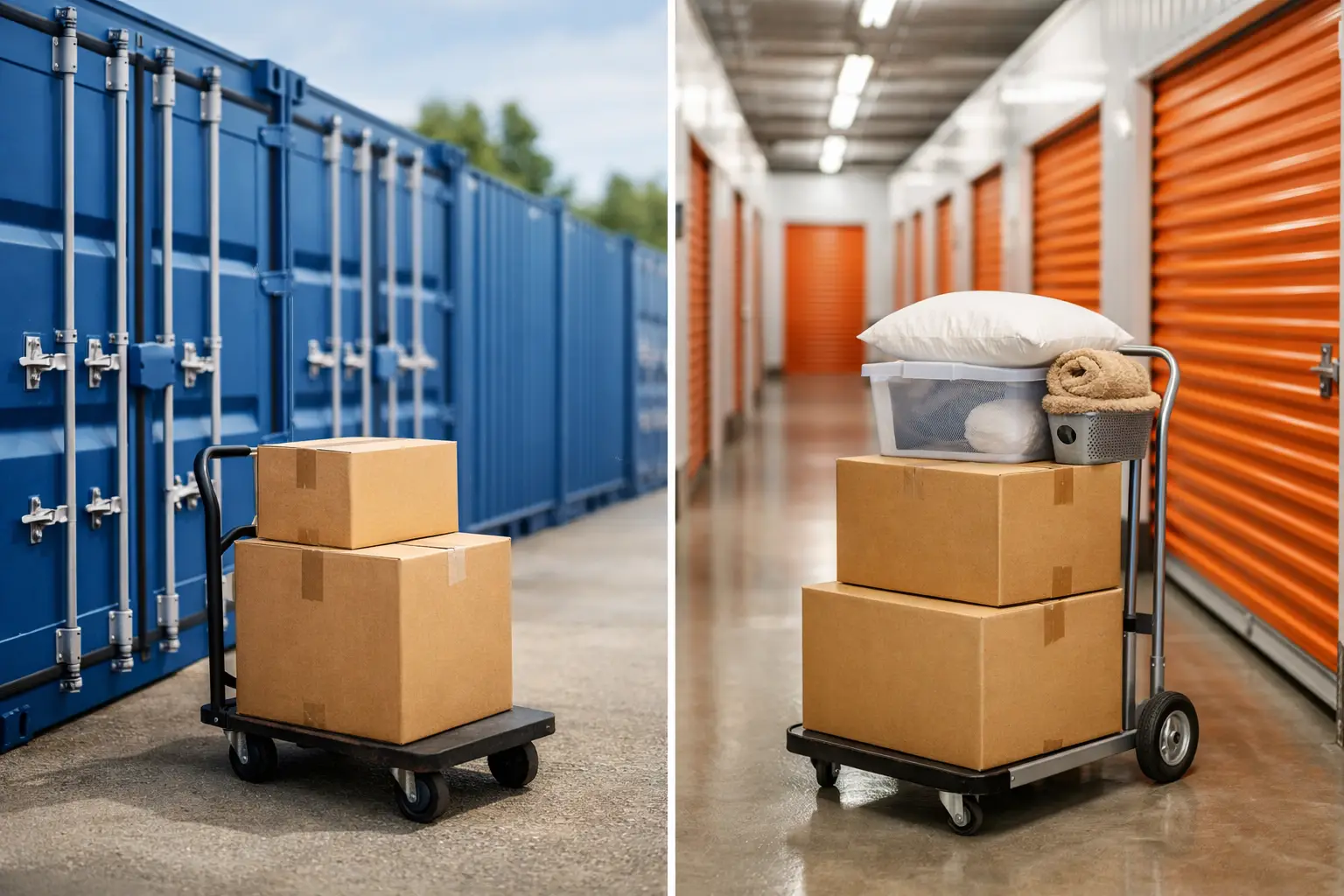
A house sale completes later than expected. Builders need another fortnight. Your new office is not ready for the desks and files. These are the moments when storage stops being a nice extra and becomes part of a well-managed move. When comparing container storage vs self storage, the right choice usually comes down to one practical question: do you need regular access to your belongings, or do you need them stored securely until a set date?
Both options can protect your possessions during a move, renovation or business transition. They work differently, however, and choosing solely on the weekly price can create inconvenience later. Understanding access, loading, security and the type of items being stored will help you make a decision with confidence.
What is container storage?
Container storage generally means your belongings are loaded into a secure storage container, which is then kept at a storage depot or warehouse facility. Depending on the provider, the container may be loaded at your home, loaded at the depot, or filled by a removals team as part of your move.
It is particularly well suited to customers who are moving between properties, waiting for completion dates, relocating abroad or carrying out substantial building work. Once the container has been packed and secured, it can remain untouched until you are ready for delivery.
The main advantage is efficiency. A removals company can collect furniture, boxes and other household contents, load them carefully, and transfer them directly into storage without you having to make several trips. This reduces handling, saves time and keeps the move organised.
Container storage is not normally designed for frequent visits. Access is often arranged in advance, as staff may need to retrieve the container from its storage position. That is rarely a problem when storing a whole home or office for a defined period, but it is worth considering if you expect to need individual items every few weeks.
What is self storage?
Self storage gives you your own unit at a dedicated facility. You take your belongings to the site, place them in the unit and generally retain the key or access code. Many sites offer extended opening hours, with some providing access at any time.
This option works well for people who need to dip in and out of storage. A tradesperson might keep tools and stock in a unit. A small business could use it for promotional materials or archived paperwork. A household may store seasonal items, sports equipment or boxes while gradually sorting a loft or garage.
The flexibility is useful, but it also places more responsibility on you. You may need to organise transport, lifting and loading, and you will need to pack the unit sensibly so that belongings can be reached safely. A unit that is filled from floor to ceiling can be economical, but it is not convenient if the item you need is behind a stack of boxes and a wardrobe.
Container storage vs self storage: the key differences
The clearest distinction is access. Self storage is usually the better choice if you need regular, independent access and want to collect or add items at short notice. Container storage is better suited to longer-term, less hands-on storage where collection and return are managed around your move.
Cost can vary by location, unit size, storage length and the services included. Container storage may offer better value for a full household load because space is allocated around the contents being stored and transport can be coordinated with your removal. Self storage can be cost-effective for smaller loads or when the convenience of frequent access matters more than collection and delivery support.
Loading is another important difference. With self storage, you usually do the physical work yourself unless you arrange a separate removals service. This can suit someone storing a few boxes, but it becomes harder when dealing with large furniture, fragile belongings, stairs or tight parking. Container storage can be a more straightforward option for a complete move because professional movers can protect, carry and load items in a planned order.
There is also the question of space. Self storage units come in fixed sizes, so it can be difficult to judge exactly how much room you need. Hiring too large a unit means paying for unused space; hiring too small a unit can lead to rushed packing or a second unit. A storage survey or an experienced removals team can give a more reliable estimate, especially for the contents of a two-, three- or four-bedroom home.
Security and protection for your belongings
A good storage decision should never be based on access alone. Ask how the site is secured, whether it has monitored alarms, CCTV, controlled entry and appropriate fire protection. You should also check who can access the stored goods and what procedures are followed when items are collected or released.
For container storage, ask whether containers are kept inside a secure warehouse or outdoors. Indoor storage can provide an additional layer of protection from weather exposure and may offer a more stable environment for furniture, documents and other sensitive contents. The condition of the containers matters too. They should be clean, dry, secure and suitable for the items being stored.
For self storage, inspect the unit before committing. Look for signs of damp, check that the door closes properly and ask about the facility’s pest-control arrangements. If you are storing upholstered furniture, wooden items, electronics or business records, avoid packing them while damp and use suitable covers or strong cartons.
Insurance deserves a separate conversation. Some household policies include limited cover while possessions are in storage, but terms and exclusions vary. Confirm what is covered, whether the cover applies throughout loading and transport, and whether you need to declare high-value items. An insured removals and storage provider can explain the protection available and help you avoid assumptions at a stressful time.
Which option suits a house move?
For most house moves, container storage is the more practical choice when there is a gap between leaving one property and moving into the next. Your belongings can be collected once, protected by a trained team and held securely until your new home is ready. It is especially helpful when exchange and completion dates change, or when a chain creates uncertainty.
Self storage may suit a move where you want to declutter gradually before putting a property on the market. You can take non-essential possessions to the unit over several weekends, creating a clearer home for viewings while keeping those items available if needed. It can also work for renters moving into a smaller flat who want time to decide what to keep.
The deciding factor is how the storage fits into the wider move. If you are already arranging professional packing and removals, integrating container storage can reduce journeys, lifting and the risk of damage from repeated handling. Phoenix Rising Removals and Storage can coordinate collection, secure storage and redelivery as part of a planned move, rather than leaving you to manage separate suppliers.
When self storage is the better choice
Choose self storage when access is central to the reason you are storing items. This might include running a small online business, storing stock that changes regularly, keeping equipment close to home or working through a renovation room by room.
It is also useful for customers who prefer to load at their own pace. If there is no fixed moving date and you have a van available, a self storage unit can provide a flexible place to put belongings while you sort, donate or sell them.
Just be realistic about the time involved. Repeated car journeys, hiring a van, carrying heavy items and arranging help can quickly outweigh a lower advertised storage rate. For large or awkward contents, professional collection may still be the safer and more efficient route.
Questions to ask before booking storage
Before selecting either option, establish how long you expect to store your belongings and whether that period may change. Ask about notice periods for redelivery or ending the agreement, access arrangements, minimum rental terms and any collection or delivery charges.
You should also ask how items will be protected in transit and in storage. Furniture blankets, mattress covers, labelled boxes and a clear inventory make a real difference. For business storage, consider whether documents, IT equipment, stock or machinery need particular conditions or controlled access.
Finally, avoid storing prohibited or unsuitable items. Perishable food, flammable liquids, gas bottles, illegal goods and valuables such as cash are commonly excluded. If you are unsure about an item, ask before it is packed rather than discovering a restriction on moving day.
The best storage arrangement is the one that removes pressure from your move. If your belongings can stay packed until a confirmed delivery date, container storage offers a secure, managed solution. If you need to come and go regularly, self storage may give you the control you need. A short conversation about your timings, access needs and the volume of goods can prevent a great deal of unnecessary work later.