
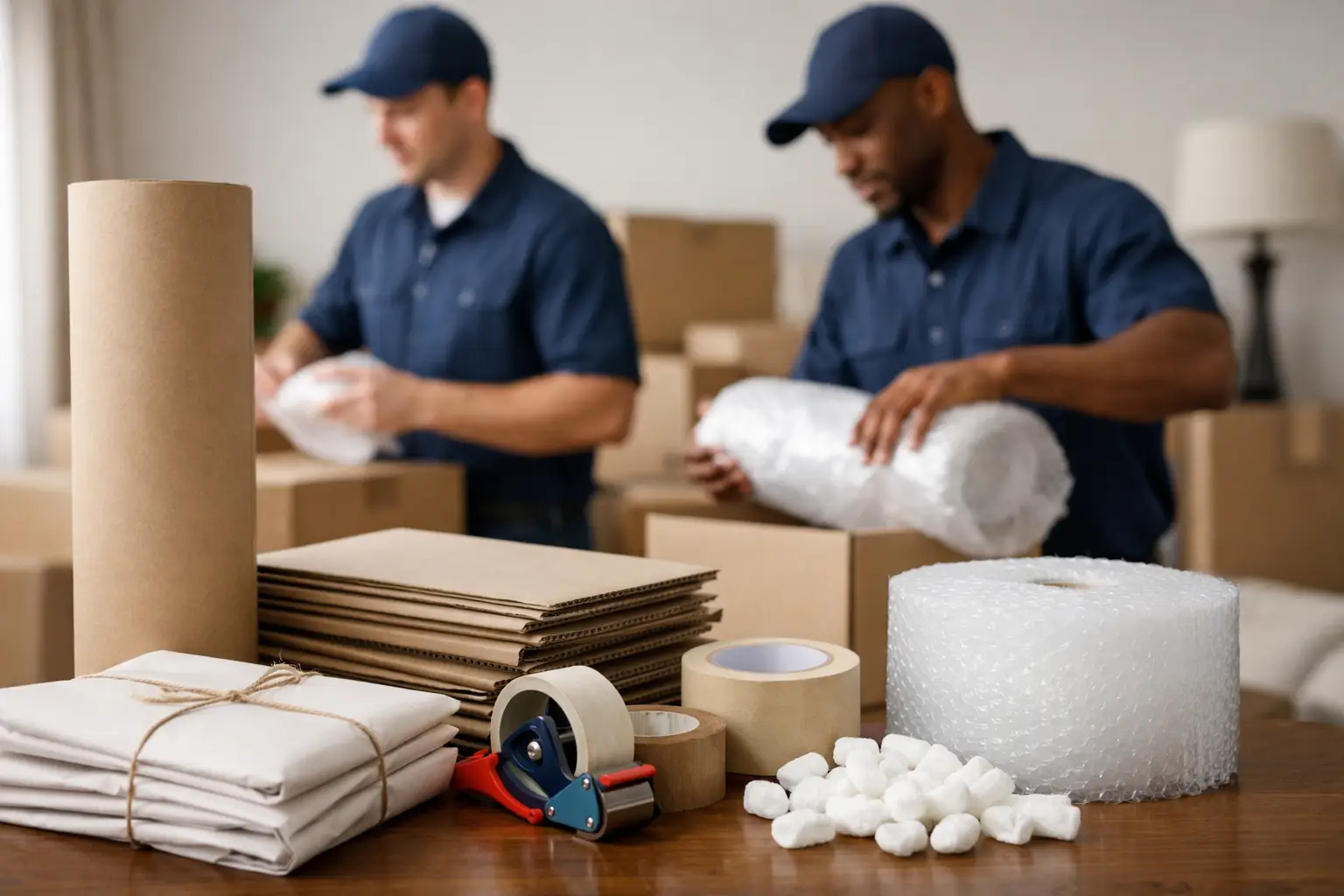
A move can quickly become harder than expected when you are surrounded by half-filled boxes, fragile possessions and a shortage of tape. So, do movers provide packing materials? Many professional removals companies do, but what is supplied, whether it is included in the price and who does the packing will vary between moves.
The clearest answer should always come from your written quotation. A dependable removals company will explain the packing options available before moving day, so there are no surprises when it comes to boxes, protective wrapping or additional charges.
Do movers provide packing materials as standard?
Some movers include a basic amount of packing protection as part of a removal service. This may cover furniture blankets, transit covers and straps used by the removal team to protect items while they are being carried and transported. These materials are normally part of the crew’s working equipment and do not necessarily mean that boxes, tape and wrapping paper are included for you to pack with beforehand.
Packing materials for the contents of your home are commonly supplied in one of three ways. They may be included with a full professional packing service, added to a part-packing service for selected rooms or fragile items, or purchased separately if you prefer to pack yourself.
This distinction matters. A transport-only quote may include careful loading, insured removal and protective covers for furniture, yet leave you responsible for preparing boxes and wrapping your belongings. A full packing quote should set out the materials and labour needed to pack the agreed contents.
What packing materials can a removals company supply?
A professional mover can usually provide materials designed for the demands of removal work rather than everyday storage. The right choice depends on the size of your property, the volume being moved and the items that need extra protection.
Common supplies include:
- Strong single-wall and double-wall cardboard boxes in several sizes
- Wardrobe cartons for hanging clothes
- Packing paper for crockery, glassware and ornaments
- Bubble wrap and protective wrap for delicate or high-value items
- Packing tape, labels and marker pens
- Mattress, sofa and furniture covers
For larger or more complex moves, specialist crates, picture cartons, TV boxes and custom protection may also be appropriate. Not every item benefits from the same material. Heavy books need smaller, stronger boxes, while lightweight bedding can go into larger cartons. Putting too much into one box increases the risk of damage and makes handling less safe for everyone involved.
Full packing, part packing or self-packing?
The best option depends on your time, budget and confidence. There is no single right approach for every household.
Full packing service
With a full packing service, trained packers prepare the agreed contents of your property, normally using materials supplied by the removals company. This is often the most practical choice for busy families, people working up to moving day, long-distance relocations and households with a large number of fragile possessions.
Professional packers know how to wrap glassware, secure plates, protect mirrors and use the available space in a carton safely. They can also work efficiently, often completing in a day what might otherwise take several evenings or weekends. You will usually still need to keep essentials such as passports, medication, valuables and important paperwork with you.
Part-packing service
Part packing provides support where it is most useful. You might pack clothes, books and non-breakable belongings yourself, while the removals team handles the kitchen, artwork, lamps, mirrors or other fragile items.
This can reduce costs while giving you reassurance that the most difficult items have been packed with suitable protection. Be specific when requesting a quote: “fragile packing” can mean different things unless the rooms and items covered are clearly agreed.
Self-packing with supplied materials
If you would rather pack at your own pace, many movers can supply boxes and materials in advance. This gives you access to removal-grade cartons without having to make several last-minute trips to the shops.
Self-packing can be a good value option, but it needs planning. Start early, label every box with its destination room and note any fragile contents. Avoid leaving packing until the final night, when rushed decisions can lead to poorly protected belongings or cartons that are too heavy to lift safely.
What is normally not included?
It is sensible to assume nothing is included unless it appears on your quotation. Boxes and packing paper may be chargeable where the service is transport only. Specialist materials, dismantling and reassembly, storage containers, export wrapping and packing for unusually delicate items can also sit outside a standard removal price.
There may also be limits around items that movers cannot pack or transport without prior agreement. Hazardous materials, flammable liquids, gas bottles, certain chemicals and some perishable goods require separate arrangements or should not be loaded at all. If you are unsure about an item in the garage, shed or utility cupboard, raise it before moving day.
For office moves, the same principle applies. Crates, document cartons, anti-static protection and specialist packaging for IT equipment may be available, but should be discussed during the survey. Business continuity depends on knowing exactly how computers, files and equipment will be packed, labelled and placed at the new premises.
Questions to ask before you book
A good removals survey is the right time to discuss materials, not an afterthought once boxes are already needed. Ask whether packing materials are included in the quoted price, which items will be packed by the team and whether unused boxes can be returned or collected.
It is also worth asking how fragile items will be protected, whether furniture covers are used in transit and what packing arrangements affect the company’s insurance cover. Insured service is reassuring, but it works best when the mover has an accurate picture of the items being moved and the level of packing support required.
If access is difficult, mention this too. Narrow staircases, top-floor flats, restricted parking and long carrying distances can all affect the practical plan for delivery and the type of protection needed. An experienced team will assess these details in advance rather than trying to solve them under pressure on the day.
Why removal-grade materials are worth considering
Using supermarket boxes or second-hand cartons may appear economical, and they can be suitable for light, non-fragile items if they are clean and structurally sound. The trade-off is that they are often different sizes, harder to stack securely and more likely to weaken after previous use.
Purpose-made removal boxes are designed to stack in a vehicle and withstand normal handling. Combined with proper packing paper, tape and protective covers, they help the crew load more efficiently and reduce movement during transport. This is particularly valuable on a long-distance UK move, when your possessions will spend longer in the vehicle.
At Phoenix Rising Removals and Storage, packing support can be tailored to the move rather than forcing every customer into the same package. Whether you need a complete packing service, a supply of quality materials or help with the most fragile items, the aim is to make moving day organised, carefully managed and less physically demanding.
Before you begin packing, take a few minutes to confirm what your mover will bring and what you need to prepare yourself. That small conversation can prevent a stressful shortage of boxes and give your belongings the protection they deserve from the moment they leave your home.