
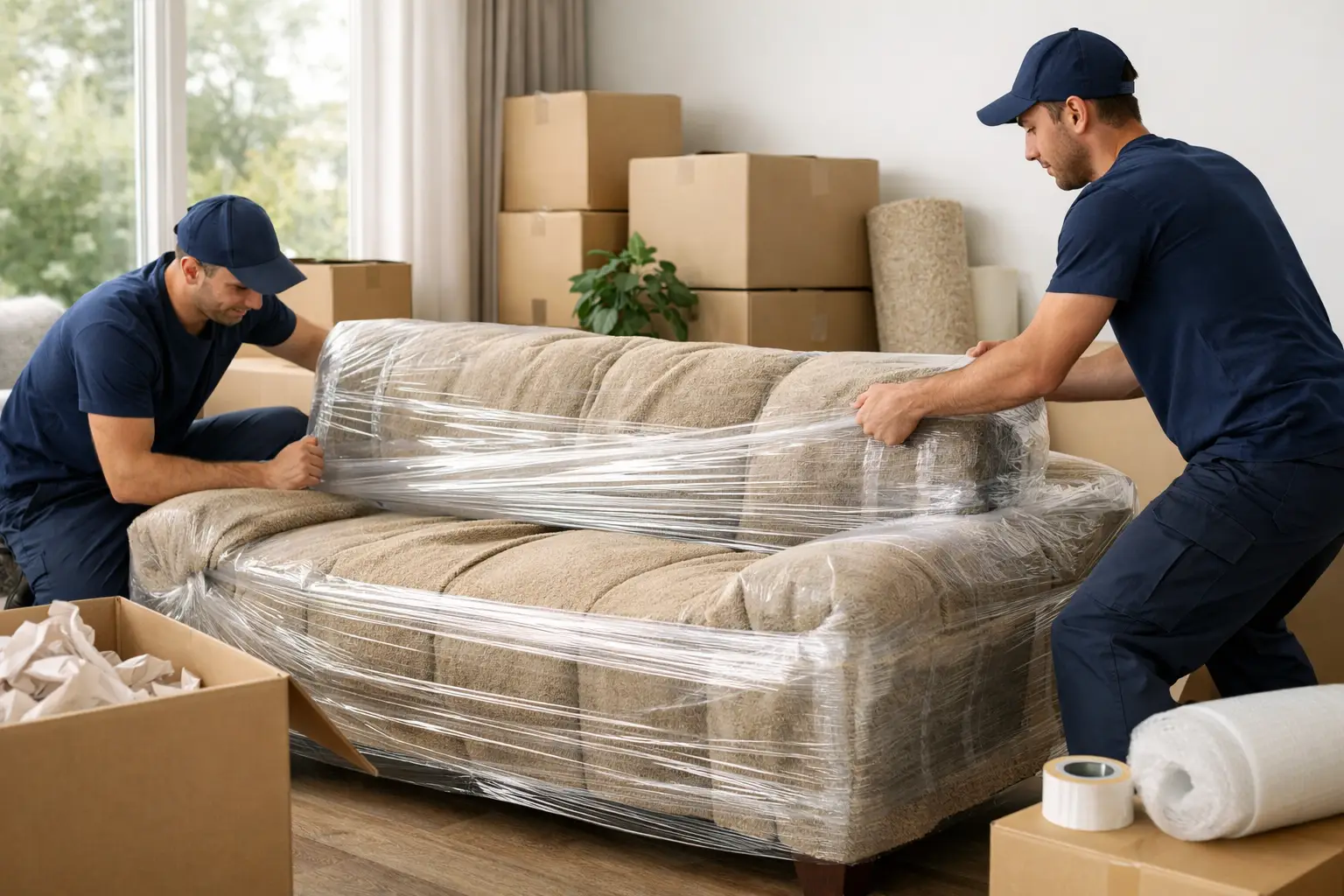
A sofa is often the item that turns an otherwise straightforward moving day into a difficult job. It is bulky, easily marked, awkward around corners and surprisingly heavy once two people are trying to control it on stairs. Taking time to pack a sofa safely protects the upholstery, your property and the people carrying it.
The right approach depends on the sofa’s size, material and mechanism. A compact two-seater may only need clean covers and careful handling, while a leather corner sofa, recliner or sofa bed may need partial dismantling, extra protection and a planned route through the property. The aim is not simply to wrap it up. It is to prepare it for lifting, transport and unloading without exposing vulnerable areas to damage.
Before You Pack a Sofa Safely, Measure Everything
Start by measuring the sofa’s height, width and depth. Then measure the narrowest points on its journey: internal doors, hallways, staircases, landings, external gates and the entrance to the new property. Do not assume that because a sofa entered the room, it will leave by the same route. Renovations, new flooring, bannisters and parked vehicles can all change the available space.
Check whether the feet, legs, headrests or cushions can be removed. Removable components can make a substantial difference when manoeuvring through a tight hallway. Keep all screws, bolts and brackets in a labelled bag, then tape the bag to the underside of the sofa or place it in an essential-items box. Never force a fitting if it is resisting, particularly on older furniture where threads and fixings may be worn.
If your sofa has a reclining or bed mechanism, consult the manufacturer’s guidance where possible. These designs have moving parts that can shift during transport. Make sure the mechanism is fully closed and secured before wrapping. With electric recliners, disconnect the power cable, remove batteries from any handset if applicable, and protect cables separately so they cannot snag.
Prepare the Room and the Moving Route
Clear the route before the sofa is lifted. Remove rugs that could slip underfoot, pictures that could be knocked from walls, and small furniture that narrows a turn. Open doors fully and, where safe to do so, secure them so they cannot swing back into the carrying route.
Protect the property as well as the sofa. Door frames, freshly painted walls and wooden bannisters are easily scuffed when a large item is being turned. Thick moving blankets, cardboard corner protectors or protective floor coverings can help where access is particularly tight. This preparation takes a little time but prevents rushed decisions when the sofa is already in someone’s hands.
It is also worth considering the weather. Rain can quickly soak through fabric coverings, while damp trapped under plastic can affect leather, timber feet and certain upholstery finishes. If rain is expected, have a dry, covered route from the house to the removals vehicle and avoid leaving the sofa outside while other items are loaded.
Materials That Protect a Sofa Properly
A sofa needs protection that cushions it from knocks without trapping unnecessary moisture. For most moves, prepare the following materials before you begin:
- Clean furniture blankets or padded moving covers
- Stretch wrap for holding protective covers in place
- Bubble wrap or cardboard for wooden feet, corners and delicate trim
- Strong tape, used only on the outer protective layer
- Mattress bags or purpose-made furniture covers for added dust and moisture protection
Avoid placing adhesive tape directly on upholstery, leather, varnished wood or metal trim. Tape residue can be difficult to remove and may permanently mark the surface. Use stretch wrap around the blankets instead, keeping it snug enough to prevent the covers slipping but not so tight that it compresses cushions or damages delicate fabric.
For pale fabric sofas, use clean covers only. Dirty blankets can transfer marks that may be harder to remove than the dust you were trying to prevent. Leather sofas need particular care: a breathable padded cover is usually better than tightly wrapping the leather in plastic for a long period, especially in warm or damp conditions.
How to Pack a Sofa Safely for Moving
Begin by removing loose cushions, throws and detachable headrests. Pack cushions in clean bags or wrap them in blankets, then label them so they do not get separated from the sofa. Loose cushions are more likely to pick up dirt or be damaged if they are carried unprotected.
Next, protect the most exposed parts. Wrap feet and legs with bubble wrap or cardboard, particularly if they are timber, chrome or finished in a dark paint that will show chips. If legs can be removed, label each set of fixings and wrap the legs together. Do not place loose feet inside the sofa unless there is a manufacturer-designed storage compartment, as they can damage the lining or mechanism in transit.
Cover the entire sofa with furniture blankets, overlapping them to avoid gaps at the arms, corners and base. The arms usually take the greatest impact when moving through doors, so use an extra layer there. Secure the blankets with stretch wrap, passing it around the furniture rather than directly across bare upholstery.
For a long-distance move or temporary storage, a final outer cover can provide useful protection from dust and light moisture. However, the sofa should be clean and completely dry before it is covered. Wrapping damp upholstery for days or weeks can lead to unpleasant odours and, in some cases, mould.
Lift and Carry Without Causing Injury
Packing protects the furniture, but safe lifting protects everyone involved. A sofa should normally be moved by at least two capable adults, and larger corner units may need more people or professional equipment. Agree the route and commands before lifting. A simple call of “lift”, “stop” and “down” is far safer than trying to coordinate while carrying the weight.
Lift from the strongest parts of the frame, usually beneath the base, rather than pulling on arms, cushions or a reclining mechanism. Keep the load close to your body, bend through the knees and avoid twisting while carrying. If you need to turn, move your feet rather than rotating your back.
A common method is to stand the sofa on one end or edge to reduce its width through a doorway. This can work well, but only if the people carrying it can maintain control and the feet or frame are protected. Never balance a sofa upright unattended, especially near children, pets, glass panels or vehicles.
If a sofa feels too heavy, too wide or unstable at any stage, stop. The risk of injury or property damage is not worth saving a few minutes. A professional removals team has trained movers, furniture blankets, securing equipment and purpose-built vehicles to manage difficult access safely.
Load the Sofa Correctly in the Vehicle
The sofa should travel upright or on its back where practical, with its weight supported evenly. The best position depends on the vehicle and what else is being moved. In many cases, placing it against a padded side wall helps keep it stable and leaves room for boxes or other furniture to be loaded securely around it.
Do not place heavy boxes, appliances or sharp-edged items on top of a sofa. Even when the outer cover looks secure, concentrated weight can crush foam, distort cushions and damage the frame. Keep it away from items that could leak, such as paint, cleaning products or garden equipment.
Use straps to secure the sofa to the vehicle’s anchor points. Straps should hold the item firmly in place without being tightened directly against unprotected upholstery. A sofa that shifts during a journey can damage itself and the rest of the load, particularly when travelling on uneven roads or making repeated stops.
When Professional Packing Is the Safer Choice
Some sofas are difficult enough to warrant professional assistance from the outset. This is particularly true for oversized corner units, antique furniture, valuable leather sofas, sofa beds, electric recliners and homes with narrow stairs or several flights of access. The same applies when moving dates are tight or there is no suitable vehicle for safe transport.
Professional packers can assess access before moving day, provide the right protective materials and take responsibility for loading the item securely. Insured removals support also offers valuable reassurance when furniture is costly or has sentimental value. Phoenix Rising Removals and Storage can provide packing and removals support for moves across southern England and throughout the UK, helping ensure large furniture is handled with the care it requires.
A well-protected sofa should arrive ready for its new room, not as another problem to solve after a long move. Plan the route, use clean protective materials and ask for help when the job exceeds what can safely be managed at home.