
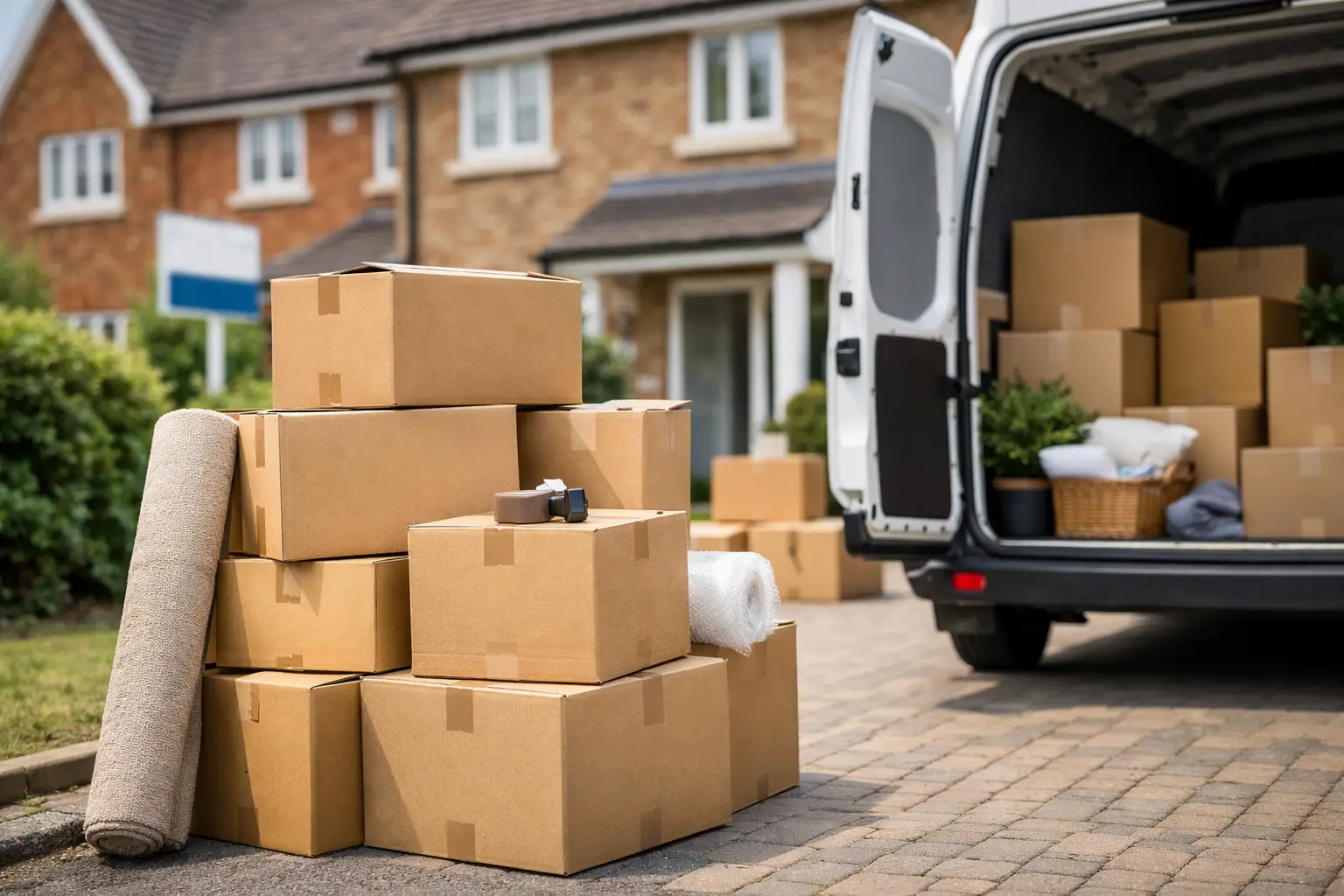
The wrong box usually reveals itself halfway through a move – when the bottom starts to bow, the handles tear, or a stack in the van shifts more than it should. Choosing the best boxes for moving house is not just about finding something cheap and roughly the right size. It is about protecting your belongings, making lifting safer, and helping the whole move run more smoothly from packing day to unloading.
A good box does three jobs well. It holds its shape under weight, stacks securely, and suits the items inside it. That sounds simple, but many moving problems start when people use whatever they can find at short notice. Supermarket boxes can be useful for light, dry goods, but they are rarely the best option for heavier household items or anything fragile.
What makes the best boxes for moving house?
Strength comes first. If a box is carrying books, kitchenware, files or ornaments, single-walled cardboard often is not enough. Double-walled boxes are usually the safer choice because they cope better with pressure, stacking and transport. They also hold up more reliably if the move takes longer than expected or the boxes need to go into storage.
Size matters just as much as strength. A large box filled with bedding is easy enough to manage. The same box filled with books is difficult to lift and more likely to split. In practice, the best boxes for moving house are not all one type. A mix of small, medium and specialist cartons works better than trying to pack everything into one standard size.
It is also worth paying attention to shape. Uniform boxes stack neatly in a removals vehicle and in storage, which reduces wasted space and helps keep loads stable. Oddly shaped or very worn boxes can make packing slower and increase the risk of crushed corners or shifting stacks.
Small boxes are best for heavy items
If you are packing books, tools, tins, paperwork or small kitchen items, small boxes are the safest option. They stop you from overpacking by accident and make lifting more manageable. This is better for your belongings and better for your back.
People often assume a bigger box means fewer trips, but heavy items packed in large cartons can quickly become a problem. They are awkward to carry, difficult to stack securely, and more likely to fail at the seams. For dense household items, smaller double-walled boxes are usually the most practical choice.
Medium boxes handle most everyday packing
Medium boxes are the workhorses of a house move. They suit toys, folded clothes, small appliances, pots, pans and general household contents that are not especially heavy or especially fragile. If you are trying to keep packing organised room by room, medium cartons are often the easiest size to label, stack and move around the property.
This is also the size many households end up using most. They offer enough capacity to make steady progress without creating boxes that are too bulky to handle safely. For a typical family move, medium boxes usually form the core of the packing plan.
Large boxes are for light, bulky items
Large moving boxes have a place, but only when used properly. They are ideal for duvets, pillows, cushions, lampshades, soft toys and lighter clothing. They are less suitable for anything weighty, even if it technically fits.
A large box packed with mixed items can become unbalanced very quickly. That is why it helps to be disciplined about what goes into them. Think volume rather than weight. If the contents are soft and light, large cartons save space and help keep the move efficient. If the contents are heavy, step back down to a smaller box.
Specialist boxes are worth it for fragile or awkward items
Not everything in a home belongs in a standard cardboard carton. Glassware, bottles, hanging clothes, mirrors and televisions all benefit from boxes designed for their shape and fragility. These can seem like an extra expense at first, but they often prevent the sort of breakages and delays that cost more in the long run.
Wardrobe boxes
Wardrobe boxes allow you to move hanging clothes straight from the rail into the box with minimal handling. They are particularly useful if you are moving a full family wardrobe, formal wear or seasonal clothing you want to keep crease-free. They also save time on unpacking, which matters when moving day is already busy.
Dish and glass boxes
Kitchen packing is where many moves become stressful. Plates, mugs, glasses and bowls are heavy, fragile and awkwardly shaped. Dish packs or glass divider boxes give better support than general cartons and reduce item-to-item contact. They are especially useful for households with a lot of crockery or delicate glassware.
Picture and mirror boxes
Frames, mirrors and wall art are easy to damage because corners take impact first. Adjustable picture boxes or purpose-made mirror cartons provide more protection than wrapping these items in loose cardboard and hoping for the best. For valuable or sentimental pieces, the right box is a sensible precaution.
New boxes or used boxes?
Used boxes can work well if they are clean, dry, strong and still hold their shape. For lighter contents and short moves, good-quality second-hand cartons may be perfectly adequate. The problem is inconsistency. Once a box has already been taped, folded, stacked and carried, its strength may not be what it appears.
New boxes are more reliable, particularly for fragile items, storage, or any move where boxes will be stacked for a while. They are uniform, easier to seal properly, and less likely to fail under load. If you are packing a whole house, a combination can make sense – newer, stronger boxes for delicate or heavy contents, and sound used boxes for lighter items.
Boxes for moving house and storage need to be stronger
If your belongings are going into storage between properties, box quality becomes even more important. Storage places longer demands on cardboard than a same-day move. Boxes may be stacked for weeks or months, and weaker cartons can sag over time.
Double-walled boxes are usually the better option for storage because they resist compression more effectively. Clear labelling matters too. If you need to retrieve specific items later, a well-packed and well-labelled box saves opening several others to find what you need.
Don’t overlook the materials that make boxes work
Even the best box can fail if it is poorly packed or sealed with weak tape. Strong packing tape, bubble wrap, packing paper and void fill all make a difference. Heavy items should sit at the bottom, empty spaces should be filled, and lids should close flat rather than bulging.
It also helps to avoid mixing very fragile and very heavy items in the same carton. A box of plates with a kettle perched on top is asking for trouble. Keep contents compatible, distribute weight evenly, and mark fragile cartons clearly on more than one side.
How many boxes do you actually need?
This depends on the size of the property, how long you have lived there, and how much you are taking with you. Most people underestimate. Loft spaces, garages, airing cupboards and under-bed storage tend to hold more than expected, and it all needs boxing up somehow.
As a rough rule, smaller flats may need a modest mix of small and medium cartons, while family homes often require a much larger supply plus specialist boxes for wardrobes, kitchenware and valuables. Ordering too few boxes tends to create last-minute packing with unsuitable containers, which is exactly what you want to avoid.
When to buy moving boxes instead of improvising
If you are moving a few lightweight items across town, improvising with spare cartons may be manageable. For most full house moves, though, purpose-made moving boxes are the better route. They save time, stack properly, and reduce the chance of damage. They also make life easier for whoever is carrying and loading them.
This is where working with an experienced removals company helps. A service-led mover such as Phoenix Rising Removals and Storage understands which cartons suit which household items, how to pack vehicles efficiently, and how to prepare boxes for transport and storage without unnecessary risk.
A practical way to choose the right boxes
Start by dividing your home into three categories: heavy items, general household contents, and fragile or awkward pieces. Heavy items go in small strong boxes. Everyday contents usually go in medium cartons. Bulky lightweight items go in large boxes. Fragile and unusual items get specialist protection where needed.
That approach keeps packing sensible and avoids a common mistake – treating every room the same. Kitchens, bookcases and home offices need stronger, smaller cartons. Bedrooms usually need a mixture, including wardrobe boxes if speed and convenience matter. Garages and sheds often need sturdy boxes because tools and equipment are heavier than they first appear.
The best moving boxes are the ones that suit the contents, not just the cheapest ones available. A well-chosen box protects your belongings, makes lifting safer, and helps your move stay orderly from start to finish. If you are unsure, err on the side of stronger boxes, smaller loads and proper packing materials – moving day is easier when the basics have been done properly.