
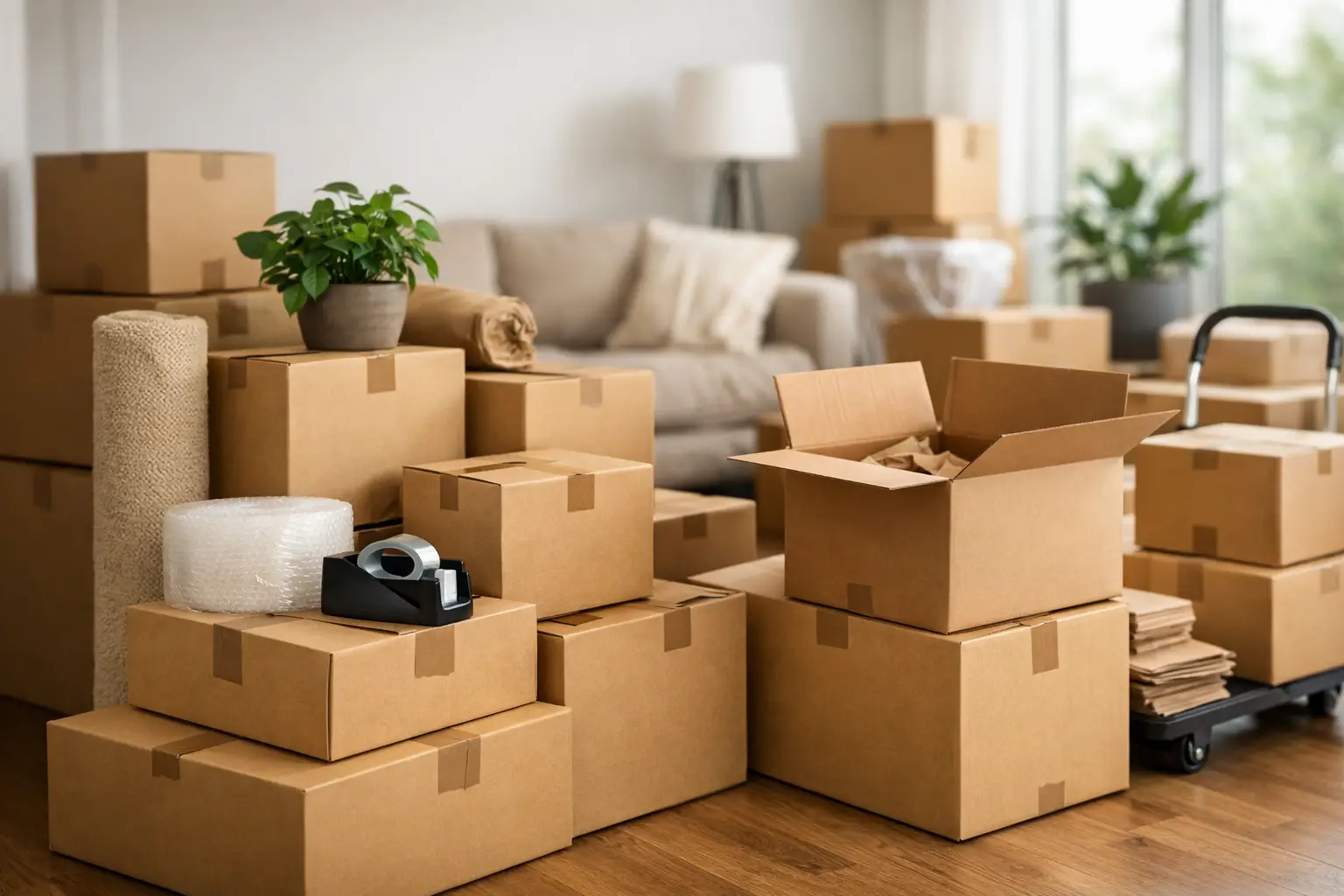
The trouble with moving boxes usually starts when people buy too few, choose the wrong sizes, or leave it until the week of the move. That is when heavy books end up in oversized cartons, glasses get mixed in with pans, and the whole job feels harder than it should. Good boxes do more than hold your belongings. They protect items in transit, make loading more efficient, and reduce the chance of damage when it matters most.
For most house moves, the best approach is not simply to buy as many boxes as possible. It is to choose the right mix. A well-packed move depends on matching the box to the item, keeping weights sensible, and making sure the boxes can cope with lifting, stacking, and transport. If you are moving locally or heading across the UK, that preparation makes the day far more manageable.
Why the right moving boxes matter
Boxes are easy to treat as an afterthought, but they have a direct effect on how smoothly a move runs. Strong, properly sized cartons stack better in the vehicle, are safer to carry, and make unpacking far less chaotic. Weak or overfilled boxes often split at the bottom, crush under pressure, or become difficult to lift safely.
There is also a time factor. When every room has been packed in a consistent way, movers can load methodically rather than stopping to deal with loose bags, mismatched containers, or damaged tape. That helps keep your move on schedule and reduces unnecessary handling.
For business moves, the same principle applies. Office equipment, files, stationery, and kitchen items all need to be packed in a way that supports quick loading and straightforward set-up at the new premises. A bit of planning at the packing stage can save a lot of disruption later.
Which moving boxes you actually need
Not every box serves the same purpose. Most moves need a combination of small, medium, and large cartons, with a few specialist options depending on what you own.
Small moving boxes
Small boxes are best for heavier items. Books, tools, paperwork, tins, and dense kitchenware should go into smaller cartons so they stay liftable. This is one of the most common packing mistakes – putting heavy items into large boxes and creating loads that are awkward and unsafe to carry.
If a box feels difficult to move before it leaves the house, it will not improve once it is stacked in a vehicle or carried up stairs.
Medium moving boxes
Medium boxes are the workhorses of most moves. They suit toys, folded clothes, pantry items, small appliances, and general household contents. If you are unsure where an item belongs, medium is often the safest starting point because it gives you flexibility without encouraging overpacking.
Large moving boxes
Large boxes are useful, but only for lighter items. Bedding, pillows, lampshades, cushions, and bulky but low-weight possessions are ideal. They help reduce the number of cartons you need, but they should not be treated as catch-all storage for whatever is left in a room.
Specialist boxes and packing materials
Some items need more protection than a standard carton can provide. Wardrobe boxes help keep clothes hanging and reduce creasing. Dish and glass boxes with dividers are useful for fragile kitchenware. Picture cartons can protect framed items, while strong double-walled boxes are often worth using for valuables, records, or heavier contents.
Packing paper, bubble wrap, tape, and marker pens matter just as much as the box itself. A good carton packed badly can still result in damage.
How many moving boxes do you need?
This depends on the size of the property, how long you have lived there, and how much you are taking with you. A one-bedroom flat with minimal furniture will need far fewer cartons than a four-bedroom family home with loft contents, garage tools, and years of stored belongings.
As a rough guide, smaller properties often need a few dozen boxes, while larger family homes may need well over one hundred once clothes, kitchen items, books, children’s belongings, and stored items are included. The kitchen alone can account for more boxes than people expect, especially if you have glassware, pans, dry food, and small appliances to pack separately.
The best rule is to allow more than you think you need. Running short near the end tends to lead to rushed packing and poor choices. Extra boxes are far less of a problem than discovering the night before the move that you still have half a cupboard left to pack.
Packing moving boxes properly
A strong box only does its job if it is packed correctly. Start by securing the base with quality tape, using more than one strip if the contents will be heavy. Place heavier items at the bottom and lighter pieces on top. Fill gaps with packing paper or soft materials so contents do not shift during transport.
Do not leave boxes half-empty if they contain fragile items, but do not overfill them either. The aim is a stable, supported load with a lid that closes flat. If the top is bulging, the box is too full. If items rattle when you lift it, it needs more padding.
Labelling is worth doing properly. Mark the room, a short description of contents, and whether the box is fragile. Clear labels make unloading quicker and help ensure the right cartons reach the right rooms first.
Common mistakes with moving boxes
The biggest issue is usually weight. People often pack for space rather than for lifting, which is why large boxes end up full of books or files. That may seem efficient at first, but it slows the move and increases the risk of damage to both contents and property.
Another common problem is mixing unrelated items together. When bathroom supplies, chargers, paperwork, and kitchen utensils all end up in one box, unpacking becomes far more frustrating than it needs to be. Room-by-room packing takes a little more discipline, but it pays off.
Used boxes can be fine, but only if they are clean, dry, and structurally sound. A reused supermarket carton or older online delivery box might work for light storage, yet it may not cope well with stacking in a removals vehicle. If a box already shows crushing, tears, or weakened corners, it is not the place for anything valuable or fragile.
When stronger boxes matter most
There are times when it makes sense to invest in better-quality materials. Long-distance moves, storage periods, and moves involving stairs or repeated handling all place more strain on boxes. The same is true if you are packing delicate items, business equipment, or possessions with sentimental value.
Storage is a good example. If boxes will be stacked for weeks or months, strength and consistency matter. A box that performs well for a same-day move may not hold up as well in a stacked storage setting, particularly if it is thin cardboard or unevenly packed.
This is where professional guidance can help. An experienced removals team can usually tell at a glance whether your packing materials are fit for the job and whether a few stronger cartons in the right places would make the move safer and easier.
Should you pack yourself or use a packing service?
It depends on your timetable, budget, and the complexity of the move. Packing yourself can save money if you are organised and can start early. It also gives you full control over how belongings are sorted.
That said, many customers find that professional packing support removes a significant amount of pressure, especially when time is tight or fragile items are involved. It is often most useful for kitchens, glassware, artwork, offices, and larger family homes where the volume of possessions is greater than expected.
A service-led removals company such as Phoenix Rising Removals and Storage can also supply suitable boxes and materials as part of a wider move plan, which helps avoid the stop-start process of sourcing supplies from multiple places.
A practical approach that saves stress
The best moving boxes are not necessarily the cheapest or the biggest. They are the ones that suit your belongings, protect them properly, and make the move easier from start to finish. A few sensible decisions at the packing stage can reduce breakages, save time on moving day, and make settling into your new property feel much more straightforward.
If you are planning a move, start with the boxes earlier than you think you need to. It is one of the simplest ways to give yourself a calmer, better organised moving day.