
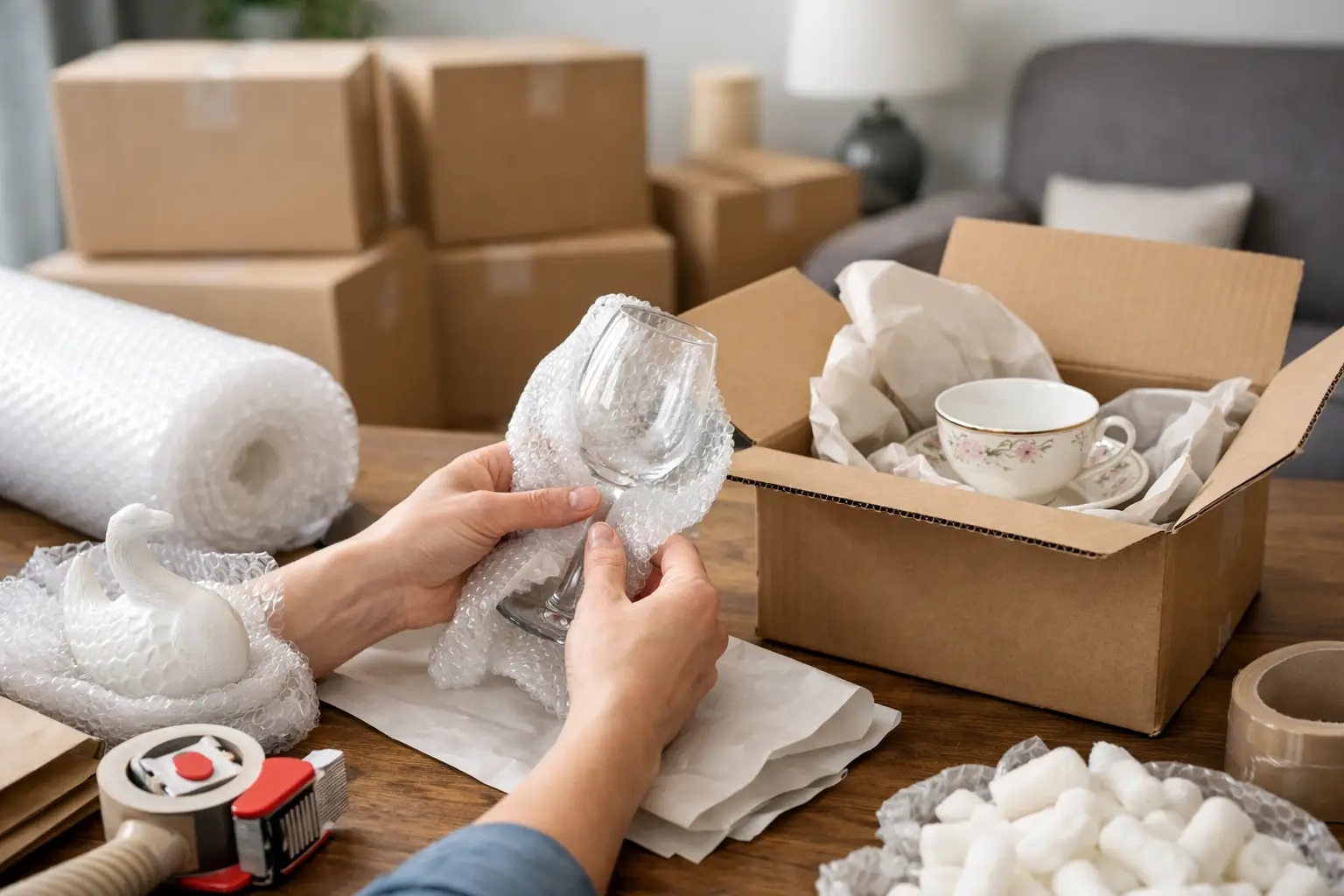
A cracked dinner plate is frustrating. A smashed mirror, broken lamp or damaged monitor on moving day is worse, because it usually comes down to one thing: poor packing rather than bad luck. If you are wondering how to pack fragile items properly, the aim is not simply to add more wrap. It is to stop movement, spread pressure evenly and use the right box for the job.
Fragile items tend to break in predictable ways. Glassware chips when it knocks together, ceramics crack when weight is placed on weak points, and electronics suffer when they are allowed to shift inside the box. Good packing is less about overdoing it and more about building protection in layers.
What you need before you start packing fragile items
The safest approach is to prepare all materials before you begin. That saves time and helps you pack consistently rather than improvising halfway through.
For most household moves, you will need strong double-walled boxes, packing paper, bubble wrap, quality packing tape, box dividers and marker pens. In some cases, you may also need corner protectors, mattress bags or specialist cartons for mirrors, artwork and televisions. Clean paper is usually better than newspaper for wrapping delicate surfaces, as it avoids ink transfer.
One common mistake is choosing boxes that are too large. Bigger boxes may seem efficient, but they encourage overpacking and leave more room for contents to shift. Fragile items are usually safer in smaller, sturdier cartons that can be lifted without strain.
How to pack fragile items without common mistakes
Most breakages happen because of gaps, pressure or poor weight distribution. A well-packed box should feel secure, compact and balanced. If something rattles when you gently shake the box, it needs more cushioning.
Start every box by creating a soft base. A layer of scrunched packing paper or bubble wrap at the bottom helps absorb shock when the box is set down. After that, wrap each item individually rather than bundling several together. This matters especially for glass, china and ornaments, where direct contact causes chips and cracks.
It is also worth resisting the temptation to use towels or clothing as your only protection. These can help fill space, but they do not offer the same consistent protection as proper packing materials. For low-value items, soft textiles may be enough. For anything sentimental, expensive or awkwardly shaped, purpose-made materials are the safer choice.
Wrap first, then fill the gaps
Each item should be wrapped fully and placed into the box with care. Once it is inside, use packing paper or soft cushioning to fill empty spaces around it. The goal is to keep every item from moving during lifting, loading and transport.
Do not force extra items into a nearly full box. Pressure from above or from the sides can do as much damage as impact. When the box is packed, add a final cushioning layer on top before sealing it.
Keep heavy and light items separate
A box of mixed fragile items can work well, but only if the weight is sensible. Heavier items should go at the bottom, with lighter and more delicate pieces above them. If a box becomes too heavy, it is more likely to be dropped, and the contents will be under greater strain.
This is why books and china, or small kitchen appliances and stemware, are better packed separately. It may mean using more boxes, but it greatly reduces the risk of damage.
Packing glassware, crockery and kitchenware
Kitchen boxes often contain the highest number of fragile items, and they are easy to underestimate because each piece feels small on its own.
Glasses and mugs should be wrapped individually with packing paper, paying extra attention to handles and rims. Place them upright in the box rather than on their sides, as this helps them carry pressure more naturally. Dividers are especially useful here because they stop items knocking together.
Plates and bowls are best wrapped one by one and packed vertically, like records on a shelf, rather than stacked flat. This reduces direct weight on the centre of each piece. Fill all side gaps and avoid leaving any room for the stack to lean.
For serving dishes, casserole pots and larger kitchenware, use smaller boxes if the items are heavy and larger boxes only when the contents are relatively light. Lids should be wrapped separately if they are glass. It takes a little longer, but it is far safer than treating one complete dish as a single packed item.
How to pack fragile items such as mirrors, pictures and lamps
Flat, awkward objects often need a different method because they do not sit neatly in standard cartons. Mirrors and framed pictures should be protected at the corners first, then wrapped fully and placed into specialist picture boxes where possible. If a mirror is particularly valuable or oversized, professional packing is usually the sensible option.
Lamps should be taken apart before packing. Remove the bulb, shade and any detachable parts, and wrap each piece separately. Lamp shades are easily crushed, so they should not be squeezed into partly filled boxes. They are often better packed alone with light padding around them.
With both mirrors and lamps, labelling matters. Mark the box clearly as fragile and note which side should remain upright if relevant. Labels do not replace good packing, but they do help with safer handling during the move.
Electronics need more than a blanket around them
Televisions, monitors, speakers and desktop equipment are some of the most expensive fragile items people move, yet they are often packed last and hurriedly.
If you still have the original box and inserts, that is usually the best option. If not, use a properly sized box with thick cushioning on all sides. Screens should be protected from direct pressure, and cables, remotes and accessories should be packed separately and labelled clearly.
For office equipment or home working setups, it is worth taking a little extra time. A loosely packed monitor or printer can be damaged even if the outside of the box looks fine. Businesses planning an office move often benefit from structured packing support because electronics are not just fragile, they are also essential for continuity.
When fragile items should not be packed together
Some items are technically fragile but still should not share a box. Candles can soften, framed glass can crack under uneven pressure, and ceramics with protruding handles or decorative details are vulnerable if packed too closely to anything heavy.
Sentimental pieces also deserve separate treatment. A valuable vase, heirloom clock or hand-finished ornament should not be packed as an afterthought alongside general household items. In these cases, the trade-off is usually between speed and safety. Packing everything quickly may save an hour now and cost much more later.
If you are using storage before moving into your new property, this becomes even more important. Boxes may be handled more than once, stacked for longer and moved in and out of units. Fragile items need packing that can cope with more than a single journey.
Labelling and stacking matter more than people think
Even the best wrapping can be undermined by poor stacking. Fragile boxes should be sealed well, labelled on multiple sides and stacked with heavier boxes underneath them, never the other way round.
Write clearly on the box and be specific where helpful. Instead of simply writing fragile, note the contents if appropriate, such as glassware, mirror or monitor. This gives anyone handling the box a better idea of how cautious they need to be.
It is also sensible to keep fragile boxes accessible in the vehicle rather than buried beneath heavier loads. Experienced removals teams plan loading with this in mind, which is one reason careful transport is about more than just getting items from one address to another.
When it makes sense to use a professional packing service
There are times when doing it yourself is perfectly reasonable, especially if you are moving a small number of straightforward household items. But if your move includes a full kitchen, delicate ornaments, artwork, business equipment or a tight schedule, professional packing can remove a lot of risk.
An experienced removals company will use proper materials, proven methods and suitable vehicles, and insured services add further peace of mind. For many customers, the value is not just in the packing itself but in avoiding the stress of wondering whether everything will arrive in one piece. Phoenix Rising Removals and Storage supports customers with packing, transport and storage, which is particularly useful when a move involves several stages rather than a simple same-day handover.
The best packing decisions usually come down to this: protect what would be difficult, expensive or upsetting to replace. A few extra materials, a smaller box or an hour of professional help can make all the difference when moving day arrives.