
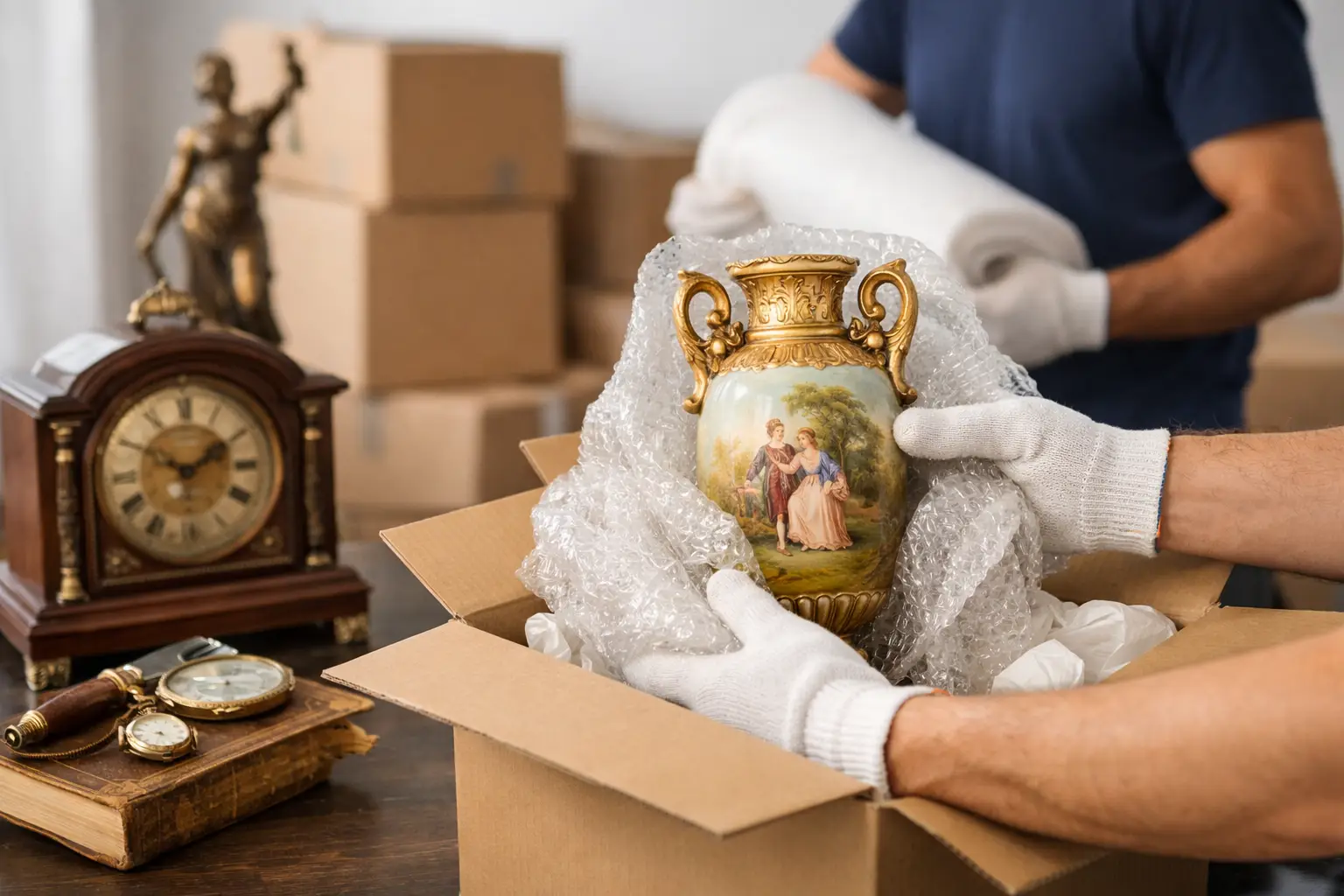
A Georgian chest can look sturdy enough to survive anything, yet a loose drawer, a weak handle or one sharp knock against a doorframe can cause damage that cannot simply be replaced. Protecting antiques during removals is less about wrapping everything in as much material as possible and more about understanding what makes each piece vulnerable.
Antique furniture, artwork, mirrors, clocks and ceramics often have age-related weaknesses that are not obvious at first glance. Old joints may have dried out, original finishes can mark easily, and a piece with financial value may also carry considerable family history. A careful removal plan gives these items the attention they need before moving day begins.
Start with a condition check and realistic plan
Before packing, examine every antique closely in good light. Photograph it from several angles and record existing marks, cracks, chips, loose veneer or areas of wear. This is useful for your own records, helps you identify fragile points, and makes it easier to explain any special handling requirements to your removals team.
Do not assume that an item is sound because it has stood in the same place for years. Test whether drawers slide out, doors stay closed and legs or handles feel secure, but avoid putting extra pressure on old joints. If a piece is visibly unstable, tell the removal company before the move. It may need a different lifting method, additional protection or assessment by a furniture restorer.
It is also worth considering the route from room to vehicle, not just the item itself. Measure large furniture and note tight turns, narrow staircases, low ceilings and uneven paths. A valuable antique can be packed perfectly and still be at risk if the collection route has not been planned. Where access is difficult, a professional survey gives the team time to arrange suitable equipment and enough trained movers.
Check valuations and insurance arrangements
A removal service can provide valuable reassurance, but insurance and valuation are not interchangeable. Check the cover available for your move, the information required for high-value items, and any exclusions that may apply. If you have a recent specialist valuation, keep a copy with your moving paperwork rather than packing it in a box.
For particularly valuable paintings, sculptures, clocks or collections, specialist advice may be appropriate. The safest approach depends on the item, its condition and its value. A removals company can manage careful transport, while a conservator or specialist art handler may be needed where museum-level protection is required.
Protecting antiques during removals with the right materials
The material touching an antique matters. Bubble wrap is useful as an outer protective layer, but it should not be placed directly against delicate finishes, gilding, polished wood or painted surfaces for long periods. Changes in temperature and pressure can leave impressions or affect vulnerable surfaces.
Start with clean, acid-free tissue paper or unprinted packing paper where it is suitable, then use soft furniture blankets, padded covers and strong outer wrapping. Corners, feet, carved details and protruding handles need extra attention because they are most likely to catch during lifting. The aim is a secure, cushioned package that does not allow the item to move inside its protection.
Avoid using newspaper directly against antiques. Ink can transfer, particularly in damp conditions, and rough paper can mark delicate surfaces. Old towels, duvets and household blankets may seem practical, but zips, buttons, seams and loose fibres can create problems. Purpose-made removal blankets and clean packing materials give more dependable protection.
For small, fragile objects, use double-walled cartons that are the right size. Wrap each item individually, support hollow areas, and fill empty space so contents cannot shift. A heavy object should never sit on top of a lighter one simply because both happen to fit in the same box.
Furniture needs more than a blanket over the top
Antique furniture should be prepared before it is wrapped. Remove loose shelves, detachable mirrors, finials and glass panels where possible, packing them separately and clearly labelling them. Empty drawers unless a removals professional has advised otherwise. Heavy drawers can strain old runners and make a cabinet unsafe to carry.
Secure doors and drawers with a non-marking method approved for the finish. Do not use ordinary adhesive tape directly on wood, veneer or lacquer, as it can pull away surface material when removed. Handles should be protected, but not used as lifting points.
Some antique pieces should not be dismantled. Old wardrobes, tables and cabinets may rely on construction methods that do not tolerate repeated assembly. If dismantling is necessary, it should be considered carefully, with all fittings labelled and kept together. In many cases, careful wrapping and appropriate vehicle space is safer than taking an old piece apart.
Give mirrors, artwork and clocks specialist attention
Glass-fronted and framed items are among the most vulnerable possessions in a home move. Mirrors and pictures should be wrapped in clean protective paper, cushioned at the corners, and placed in purpose-made picture cartons or a secure framed-item crate where appropriate. Clearly mark the package as fragile, but remember that labelling is not a substitute for correct loading.
Grandfather clocks, mantel clocks and clocks with pendulums need particular care. Pendulums, weights and keys may need removing and packing separately according to the maker’s guidance. A clock mechanism can be damaged if it is transported incorrectly, so avoid improvising. If you are unsure, seek advice from a clock specialist before moving day.
Paintings need protection from impact, moisture and excessive heat. Never stack anything on a canvas, even when wrapped. Keep framed artwork upright during transport and avoid placing it where it could flex or slide. For older works, the condition of the frame may be as fragile as the artwork itself.
Loading and transport are where preparation pays off
A carefully packed antique can still be damaged by poor loading. In a purpose-built removals vehicle, valuable furniture should be positioned so it cannot move, topple or take the weight of other items. It should be secured with suitable straps and protected from rubbing against hard surfaces.
Weight distribution matters. Large, stable items are normally loaded first, while antiques that need to remain upright or isolated are positioned according to their needs rather than convenience. Boxes of books, appliances and other dense household items should never be stacked against vulnerable furniture, artwork or fragile cartons.
Weather should be considered too. Rain, damp air and muddy access routes can introduce risk, particularly for wood, paper and textiles. A prepared team will use protective floor coverings, keep items covered while transferring them, and work methodically rather than rushing between the property and vehicle.
This is one reason professional packing and removals support can be worthwhile for a move involving antiques. Experienced movers are used to judging safe lifting points, protecting access routes and securing loads for travel. Phoenix Rising Removals and Storage can provide packing, transport and storage support as part of a planned move, helping to reduce the pressure on moving day.
Take the same care at the new property
Do not unwrap antiques in a hurry just to clear boxes. Place each piece in its intended room, allow it to settle after transport, and inspect it before disposing of packing materials. If furniture has moved between very different temperatures or humidity levels, avoid placing it immediately beside a radiator, fireplace or damp external wall.
Keep the photographs and condition notes until the move is fully complete. If an item needs reassembling, use the labelled fittings and avoid forcing parts into place. For a valuable or delicate piece, a little patience is preferable to making a repair more difficult.
The best protection for antiques is a move that is planned around them, not one that treats them as ordinary furniture. With honest preparation, suitable packing and careful handling from door to door, treasured pieces can arrive ready to take their place in the next chapter of your home.