
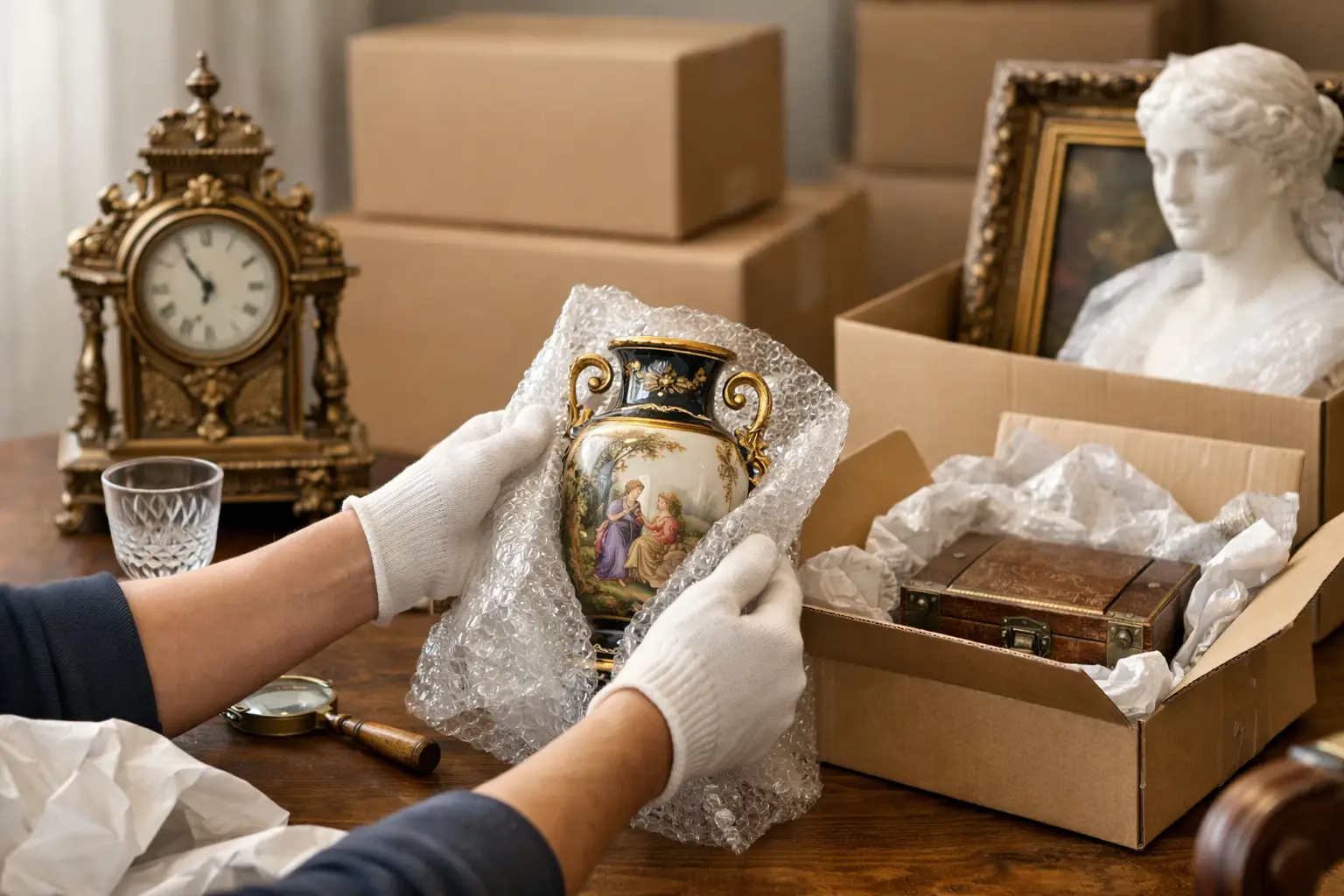
A Victorian mirror, a porcelain tea set or a mahogany chest of drawers can be worth far more than its replacement cost. Its condition, history and sentimental value cannot simply be bought back. Moving fragile antiques safely therefore calls for a planned approach, suitable materials and careful handling at every stage of the move.
The main risk is not always an obvious drop. Changes in temperature, vibration in transit, pressure from incorrectly stacked boxes and hurried lifting can all cause damage. A well-managed move starts by identifying what each item needs before a single box is packed.
Assess each antique before packing
Antiques are rarely as strong as they look. A solid-looking cabinet may have weakened joints, a loose veneer or a warped back panel. An old chair may have fragile webbing beneath the seat, while a painting can be affected by damp, direct heat and pressure against its frame.
Inspect every item in good light before it is moved. Take clear photographs from several angles and make a note of existing scratches, chips, loose handles or cracks. This creates a useful condition record and helps you decide whether an item needs specialist attention before moving.
For high-value pieces, consider obtaining an up-to-date valuation and checking that your insurance arrangements cover them during packing, loading, transport and storage. Standard cover can have limits or exclusions, particularly where an item has exceptional financial value or is already damaged. If there is any doubt, clarify this well ahead of moving day.
It is also worth considering whether an antique should travel as one piece. Some furniture can be carefully dismantled, such as a table with removable legs, but this is not automatically safer. Original fittings can be delicate, and repeated assembly may strain old screw holes or joints. If dismantling could affect the item’s condition, leave it intact and plan the move around its size.
Use the right packing materials for fragile antiques
Good packing is about preventing movement as well as cushioning against impact. Thin cardboard, newspaper and loosely filled boxes are not enough for antiques. Newspaper ink can transfer onto pale surfaces, unglazed ceramics and fabric, while an overfilled box is difficult to lift safely.
Start with a clean, dry layer of acid-free tissue paper where it will touch polished wood, delicate finishes, silver or painted surfaces. Add soft wrapping material, then use bubble wrap as an outer protective layer rather than directly against vulnerable finishes where possible. Secure wrapping with tape to itself, never directly to the antique.
For smaller pieces, use sturdy double-walled boxes in a size that can be lifted without strain. Place a cushioning layer in the base, pack the item so it cannot shift, and fill gaps with suitable packing paper or foam. The box should feel full but not under pressure. If a lid bows or the contents rattle, it needs repacking.
These items often need different treatment:
- China, glass and ceramics should be wrapped individually, with extra protection around handles, spouts, lids and protruding details. Plates are generally safer packed upright on their edge than stacked flat.
- Paintings, mirrors and framed photographs need corner protectors, a protective wrap and a rigid outer layer. Mark them clearly as fragile and keep them upright during transport.
- Clocks may need pendulums, weights or glass panels removed and packed separately. Follow any maker or restorer guidance, particularly for grandfather clocks.
- Wooden furniture benefits from padded furniture covers and breathable protective wraps. Avoid wrapping it tightly in plastic for long periods, especially if it may be stored, as trapped moisture can affect the finish.
Labelling should be clear but measured. Write the room, a brief description and handling instructions such as “This way up” or “Do not stack”. Avoid relying on “Fragile” alone. It tells someone to take care, but it does not explain how the item should be positioned.
Do not pack antiques with household clutter
A box containing a decorative vase, books and kitchen utensils is difficult to protect and easy to mishandle. Fragile antiques should be packed separately from heavy, sharp or loose household items. Keep a simple inventory as you go, particularly for collections, sets and items with multiple components.
Small pieces can be the easiest to misplace during a busy move. Place wrapped items into correctly labelled boxes, and keep those boxes together in one designated area until loading begins. Do not leave them on a windowsill, garden table or in an open car boot while other work is under way.
Plan the route before lifting anything
A safe move is often decided by practical details: a narrow hallway, low ceiling, wet paving or a flight of stairs with a tight turn. Measure large furniture and the route through both properties. Include door frames, stair landings, lifts and any external access point.
Remove rugs, trailing cables and other trip hazards. Protect door frames and banisters if a heavy item will pass close to them. On wet days, dry footwear and clear walkways matter just as much as protective wrapping. A single slip can damage an antique and injure the person carrying it.
Never attempt to carry a substantial antique alone. Furniture may be unevenly weighted, and old handles, rails or decorative elements are not lifting points. Use the main structural sections, keep the item upright where appropriate, and take time to communicate at corners, steps and thresholds.
Professional removals teams use handling equipment and furniture protection designed for this work. For particularly awkward or valuable pieces, the right equipment may include piano skates, lifting straps, protective crates or additional crew members. This is one of the situations where trying to save time can create unnecessary risk.
Load and transport antiques with care
Inside the removal vehicle, fragile antiques should be secured so they cannot slide, topple or be compressed by heavier goods. The loading order matters. Large, stable items are usually positioned first and protected, while delicate boxes and framed pieces are placed where they will remain upright and accessible.
Furniture blankets, straps and purpose-built vehicle tie points help prevent rubbing and movement during transit. A blanket alone is not enough if an item can shift when the lorry brakes or turns. Equally, straps must be positioned carefully so they secure the load without pressing on carved detail, veneer or a fragile frame.
Transport conditions also deserve consideration. Avoid leaving antiques in a vehicle for longer than necessary during very hot, cold or damp weather. This is especially relevant for paintings, instruments, clocks, leather, veneered furniture and items with glue joints. If the move involves several stops or a long-distance journey, discuss the loading plan in advance so valuables are not repeatedly moved around.
Consider storage conditions carefully
Temporary storage can be helpful when completion dates change or a new property is not ready. However, an antique should not be treated like ordinary household stock. Damp, extreme temperatures and prolonged pressure against other items can cause gradual damage that may not be obvious when the unit is first opened.
Choose secure storage that is clean, dry and suitable for household furniture and valuables. Pack furniture so air can circulate, keep boxes off the floor where possible, and avoid placing heavy items on top of fragile cartons. Check that the storage inventory identifies the most delicate pieces, making retrieval easier if you need something before the rest of your belongings.
For longer storage periods, avoid sealing natural materials in plastic. Wood, leather and textiles need protection from dust, but they also benefit from stable, dry conditions. If an item is particularly valuable or environmentally sensitive, seek advice from a conservator about its specific requirements.
When professional packing is the sensible choice
There is no single rule for every antique. A well-packed, modestly valued ornament may be manageable at home, while a large gilded mirror, antique clock or heirloom cabinet may warrant professional packing and transport. The decision depends on value, condition, size, access, insurance and how confident you are handling the item.
A professional packing service can provide appropriate materials, trained handling and a loading plan that accounts for vulnerable belongings from the outset. At Phoenix Rising Removals and Storage, careful packing, protected transport and secure storage can be coordinated as part of a wider home move, rather than leaving valuable items to be managed separately.
Give yourself time to make decisions before moving day. The safest outcome usually comes from careful preparation, clear labelling and knowing when an irreplaceable piece deserves an extra pair of experienced hands.