
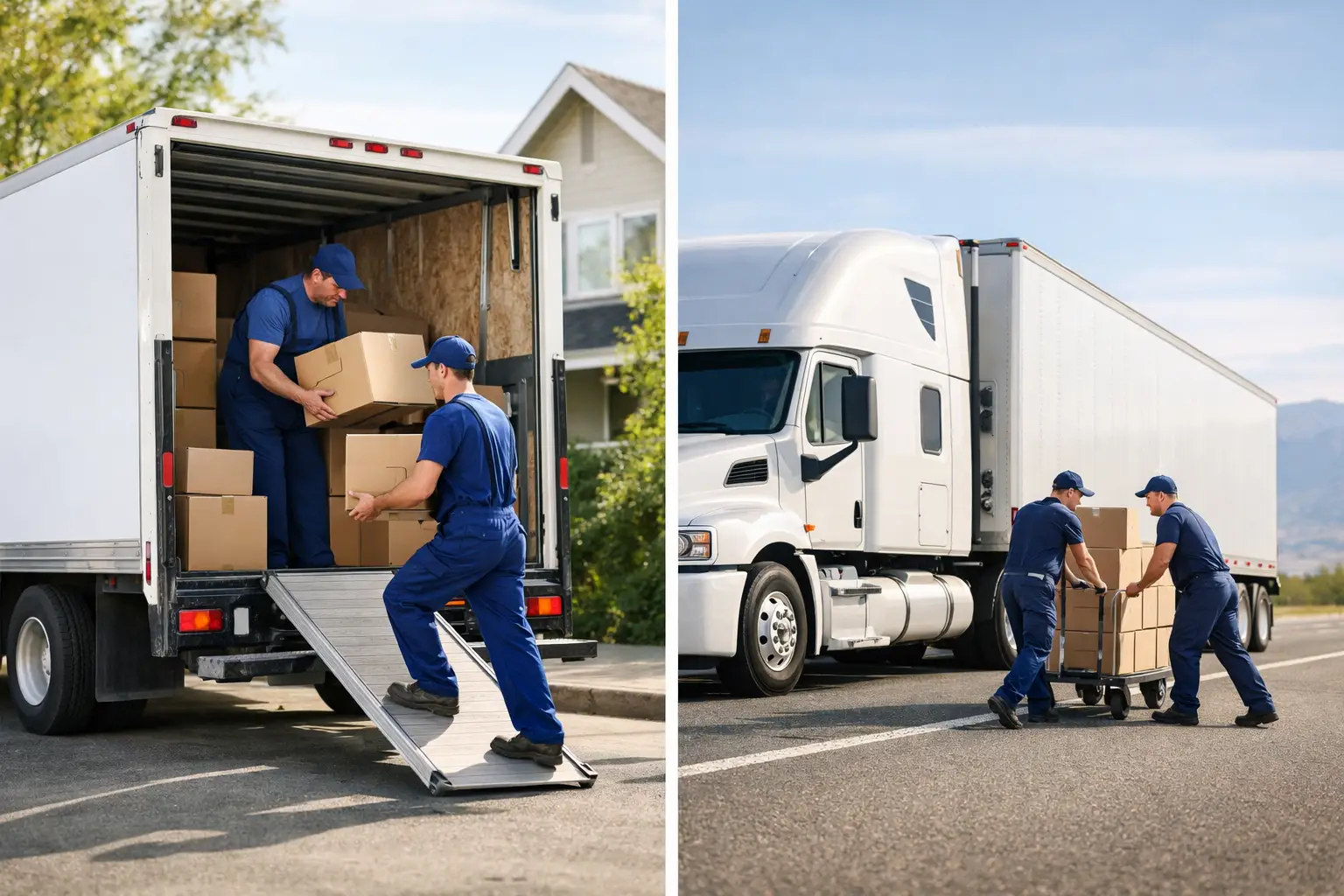
A move from Portsmouth to Waterlooville has very different demands from relocating a family home to Scotland or moving an office across the country. When comparing local movers vs national movers, the best choice is not always about distance alone. It is about choosing a removals team with the right knowledge, capacity and planning process for the move in front of you.
A local company may be ideally placed to handle a short move quickly and carefully. A national operator may have broader long-distance resources. However, a well-established regional removals company with nationwide capability can often offer the practical benefits of both: local knowledge, personal service and the operational ability to move you anywhere in the UK.
Local movers vs national movers: the main difference
Local movers generally work within a defined area, such as Hampshire, West Sussex or Surrey. Their teams are familiar with local roads, parking restrictions, property layouts and the access challenges that can affect a moving day. For a house move within the same town or a nearby village, that familiarity can save time and reduce avoidable stress.
National movers operate across the UK and may have depots, crews or partner networks in several regions. They are often set up to manage longer journeys, multi-day relocations and moves involving larger volumes. This can be useful when moving a household from the south coast to the Midlands, the North of England, Wales or Scotland.
The distinction is not always clear-cut. Some local firms only complete short-distance jobs, while others have purpose-built vehicles and experienced crews for nationwide removals. Before deciding, ask what the company regularly handles rather than relying on the label alone.
When a local removals company is the right fit
For many local moves, a nearby removals company offers a straightforward and reassuring option. The team may know that parking outside your new flat in Chichester needs to be arranged in advance, that a particular road in Portsmouth is difficult for larger vehicles, or that access to a rural property near Petersfield needs careful planning.
This local knowledge matters because delays often come from the practical details. Restricted access, narrow staircases, permit-only bays, limited loading areas and long carrying distances can all affect how a move should be planned. A company used to working in the area is more likely to ask the right questions before moving day.
Local movers can also be a strong choice when you want a more personal service. You may deal with a smaller, consistent team from survey through to delivery, which can make communication easier. This is particularly valuable for families managing completion dates, tenants working around a fixed handover time, or older customers who would benefit from professional packing assistance.
A local move does not necessarily mean a simple move, though. A four-bedroom house with a loft, garden equipment, antiques and difficult access needs the same careful preparation as a longer relocation. The company should still provide suitable insurance, trained staff, protective equipment and a vehicle with enough capacity for the job.
When national movers make more sense
A national removals service is often worth considering when distance creates additional logistical demands. Long-distance UK moves may require early loading, overnight storage, coordinated collection and delivery dates, or a larger vehicle to make the move more efficient.
For example, if you are moving from Fareham to Manchester, the removal needs to account for journey time, motorway conditions, fuel, driver hours, property access at both ends and the possibility that keys may not be released exactly when expected. A company experienced in nationwide work will build these factors into the plan rather than treating the move as a standard local job with a longer drive.
National capability can also help with larger household or commercial relocations. An office move may involve desks, IT equipment, filing, stock and specialist items that need to arrive in a particular order. The aim is not simply to transport everything safely. It is to reduce downtime and help the business reopen or continue trading as quickly as possible.
That said, a large national brand is not automatically the best answer. Some national firms rely on subcontractors, so it is sensible to establish who will carry out the work, how your belongings will be handled and who you should contact if plans change. Clear responsibility is especially important when a move involves storage or delivery on a later date.
Cost is about more than mileage
It is natural to assume that local movers cost less and national movers cost more. Distance is a factor, but it is only one part of a removals quotation. The size of the property, volume of belongings, number of movers required, access, packing requirements and storage needs can have just as much influence on the price.
A short move with poor access can take longer than a well-organised move over a greater distance. Likewise, packing a kitchen, dismantling beds, protecting fragile artwork and reassembling furniture at the new property all require time and skilled handling.
A clear quotation should explain what is included. Check whether it covers loading, transport, unloading, furniture protection, dismantling and reassembly where needed. If you require boxes, packing materials, professional packing or secure storage, ask for these services to be set out separately so you can compare like for like.
The cheapest quote is not always the best value if it leaves important work undefined. A lower price may reflect fewer staff, limited insurance, less time allowed for the job or exclusions that only become clear later. A realistic quote from an experienced mover should give you confidence that the team, vehicle and time allocated are suitable for your move.
Planning and communication can decide the experience
Whether you choose a local or nationwide mover, good planning is what turns a difficult day into a manageable one. A professional survey, either in person or by video where appropriate, helps establish the volume of goods, access arrangements and any items needing special care.
Be open about anything that could affect the job. This includes top-floor flats without a lift, long walks from the vehicle, large wardrobes, pianos, garden machinery, delicate furniture and key collection arrangements. The more accurate the information, the better the removals team can organise the right vehicle, crew and equipment.
For long-distance moves, confirm the expected collection and delivery schedule. Some services offer a dedicated vehicle, where your belongings travel directly to the new address. Others may use a part-load service, which can be more economical but may allow less flexibility on dates. Neither is inherently better, but the choice should suit your timetable and budget.
If there is a gap between leaving one property and entering the next, storage can remove much of the pressure. Secure short- or long-term storage gives you a practical place for your belongings while completion dates, renovations or tenancy arrangements are resolved.
Questions worth asking before you book
The right removals company should be happy to explain how it will manage your particular move. Ask whether the service is insured, whether the crew is employed or subcontracted, and what protection will be used for furniture, mattresses and fragile items.
You should also ask about vehicle size and whether the company has sufficient capacity for your belongings. A vehicle that is too small can lead to extra journeys, longer loading times and unnecessary disruption. For a larger home or business move, this operational detail matters as much as the headline price.
It is also sensible to establish what happens if completion is delayed. Property chains do not always run to plan, and a prepared removals company should be able to discuss the available options. These may include waiting time, returning later, temporary storage or rearranged delivery, depending on the circumstances.
Choose capability, not a label
The most useful question is not simply whether you need a local or national mover. It is whether the company has the experience and resources to manage your move safely, efficiently and with clear communication from start to finish.
For a local house move, local area knowledge and a responsive team may be your priority. For a nationwide relocation, you may need proven long-distance planning, reliable vehicle capacity and storage support. Phoenix Rising Removals and Storage combines regional knowledge across southern England with the ability to manage moves throughout the UK, helping customers avoid having to compromise between personal service and practical reach.
Give your mover a full picture of the move before accepting a quote. When the plan reflects your property, belongings, access and dates, you can focus on settling into your new home or getting your business back up and running.