
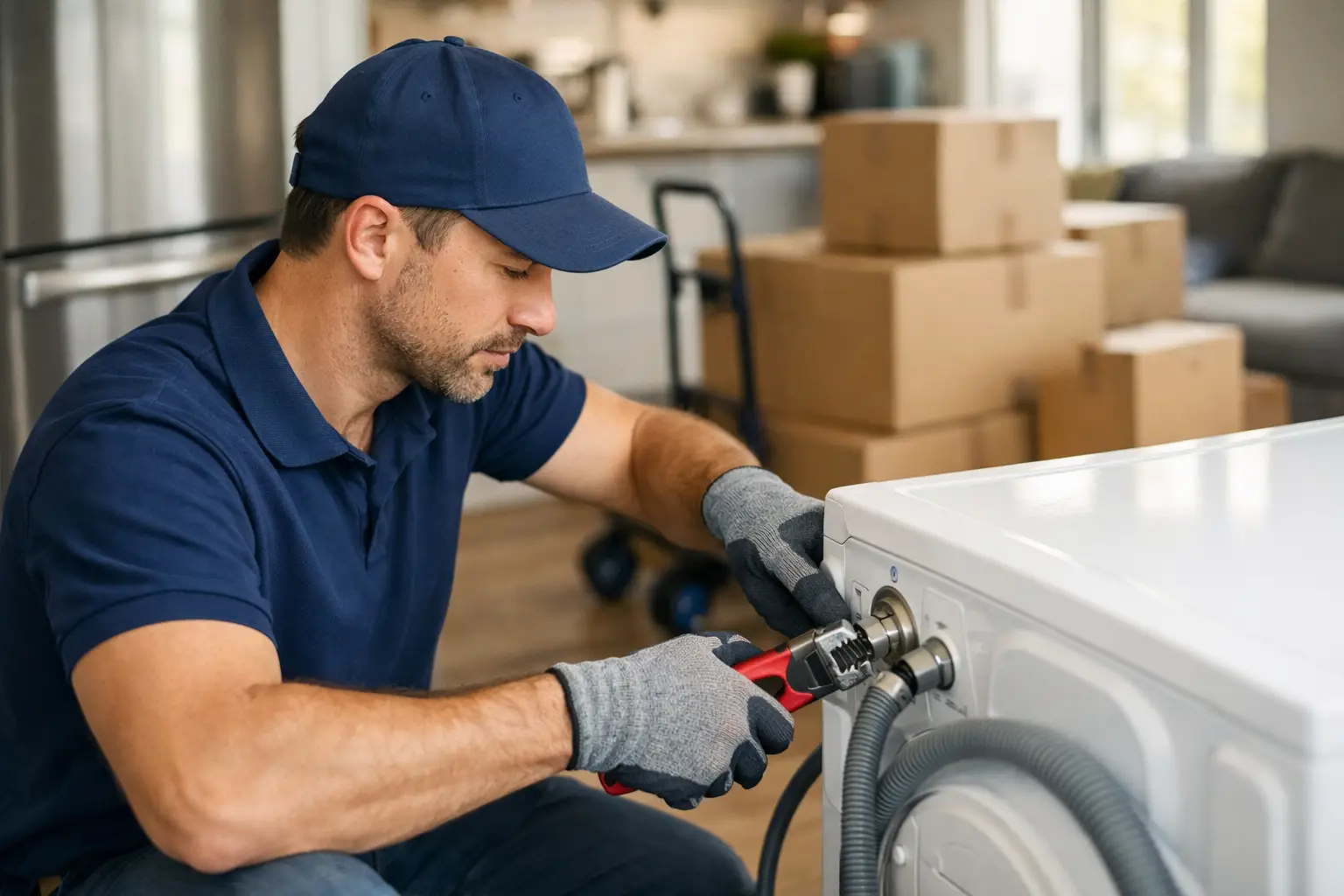
A washing machine left full of water, a fridge still cooling, or a cooker connected to the gas supply can delay moving day quickly. So, can movers disconnect appliances? The answer is sometimes, but it depends on the appliance, the connection involved and the services agreed with your removals company before the move.
Professional movers are there to transport your belongings carefully and efficiently. However, disconnecting appliances can involve plumbing, electrical work or gas safety requirements, so it should never be assumed to be part of a standard removals service. A little planning before collection day protects your property, keeps everyone safe and helps the move stay on schedule.
Can movers disconnect appliances safely?
Movers may be able to help with straightforward preparation in certain circumstances, particularly where an appliance is already isolated and only needs to be made ready for lifting and transport. For example, a removals team can usually move a freestanding washing machine once it has been disconnected, drained and secured, or load a fridge freezer once it has been emptied and allowed to defrost.
The actual disconnection is different. Water supply hoses, waste pipes, fixed electrical wiring and gas connections all carry risks if handled incorrectly. Reputable removals companies will have clear limits on what their team can do, both for safety and insurance reasons. Always ask during the quotation process rather than waiting until the lorry arrives.
At Phoenix Rising Removals and Storage, every move is planned around the items involved and the access at both properties. Let the team know about large appliances, integrated units and any particularly awkward equipment so that suitable handling, vehicle space and labour can be arranged.
Gas cookers and hobs
Gas appliances should be disconnected only by a suitably qualified Gas Safe registered engineer. This includes freestanding gas cookers, built-in ovens and gas hobs. The engineer can isolate the supply properly, cap it where required and check that the appliance is safe to move.
Do not attempt to disconnect a gas appliance yourself simply to save time on moving day. A poorly secured gas connection can create a serious hazard. Arrange disconnection in advance, and make sure the appliance is ready before the removals crew is due to arrive.
Electric cookers and hard-wired appliances
A plug-in appliance may be simple to unplug once it is switched off, but hard-wired cookers, ovens and extractor fans are a different matter. These should be disconnected by a qualified electrician. The same applies to appliances connected through a fused spur or fixed wiring.
Even where an appliance appears straightforward, the condition of the cable, socket and surrounding units can affect the job. A qualified professional can disconnect it without damaging the installation or leaving unsafe wiring behind.
Washing machines, dishwashers and fridge freezers
Washing machines and dishwashers are often connected to water feeds and drainage pipes. A competent plumber can disconnect these, particularly if valves are stiff, inaccessible or show signs of leaking. If you are disconnecting a basic appliance yourself, follow the manufacturer’s instructions, turn off the water supply and make sure all residual water is drained before moving it.
Fridges and freezers do not normally require an engineer to unplug, but they need preparation. Empty the contents, switch the appliance off early enough to defrost fully and wipe it dry. Secure loose shelves and drawers, and leave the door slightly open until collection if practical, so moisture does not cause odours or mould.
What removals teams can do once appliances are ready
When appliances have been safely disconnected, a professional removals team can take over the heavy and difficult part. Washing machines, range cookers and American-style fridge freezers are awkward, heavy and easily damaged if moved without the right equipment or technique.
Your team may use protective covers, straps, dollies and purpose-built vehicle restraints to keep appliances secure in transit. They will also assess stairs, narrow hallways, tight turns and parking arrangements at each address. This matters particularly for large fridge freezers and heavy range cookers, which may need doors removed or a different access route planned in advance.
Most removals teams will not reconnect appliances at the new property unless that service has been specifically agreed and is within their permitted scope. Booking the appropriate installer for after delivery is usually the safest approach. It also allows the appliance to be tested once it is in position, rather than rushing the job while the rest of the household move is underway.
Preparing appliances before your movers arrive
The best time to deal with appliance disconnection is one or two days before your move, not during the final hour of packing. This gives you time to resolve a stubborn connection, arrange an engineer or deal with a minor leak without affecting your collection time.
For a smooth handover, make sure appliances are emptied, cleaned and dry. Remove food from fridges and freezers, clear dishes from dishwashers and take detergent drawers out where possible. Drain washing machines and dishwashers fully, then secure hoses, cables and removable parts so they cannot knock against the appliance during transport.
Keep any transit bolts for your washing machine. These are designed to protect the drum while the appliance is being moved and should be fitted according to the manufacturer’s instructions. If you no longer have them, check the manual or contact the manufacturer for advice. Moving a washing machine without correctly securing the drum can lead to costly internal damage.
It also helps to take photographs of existing connections before disconnection, especially beneath sinks or behind integrated appliances. These can be useful for the installer at your new home and provide a record of how the appliance was set up.
Check whether an appliance is included in your quote
Not every removal quotation covers the same work. Some customers need transport only, while others need packing, dismantling of furniture, storage or support moving bulky household items. Appliance handling should be discussed clearly so there are no surprises.
Tell your removals company whether you have a range cooker, wine cooler, washer-dryer, American-style fridge freezer, integrated dishwasher or any appliance that is unusually heavy. Mention difficult access too, such as a top-floor flat, a narrow staircase or restricted parking. The more accurate the information, the better the move can be planned.
Ask whether the crew can move the appliance once disconnected, whether protective covers are provided and whether there are any conditions for accepting it into the vehicle. Some companies may decline to move an appliance that is still connected, leaking, excessively soiled or not properly drained. These are sensible precautions that protect your belongings and the rest of the load.
Do appliances need to settle after transport?
Yes, some do. A fridge or freezer should generally be left standing upright for several hours before being switched back on, particularly if it has been tilted during loading or transit. This allows compressor oil and refrigerant to settle. Check the manufacturer’s guidance for the recommended time, as it varies by model.
Washing machines and dishwashers should also be positioned carefully, levelled and connected properly before use. Do not run the first cycle until hoses have been checked for kinks or leaks. For gas and hard-wired electrical appliances, use the qualified engineer who installed or reconnected them to confirm that they are safe to operate.
A safer way to plan moving-day appliances
Appliance disconnection is a small part of a move, but it can have a big effect on timing and safety. Arrange qualified help where it is needed, prepare appliances before moving day and give your removals company a clear picture of what needs transporting. That leaves the moving team free to do what they do best: handle the lifting, loading and delivery with care, so you can focus on getting settled in your new home.