
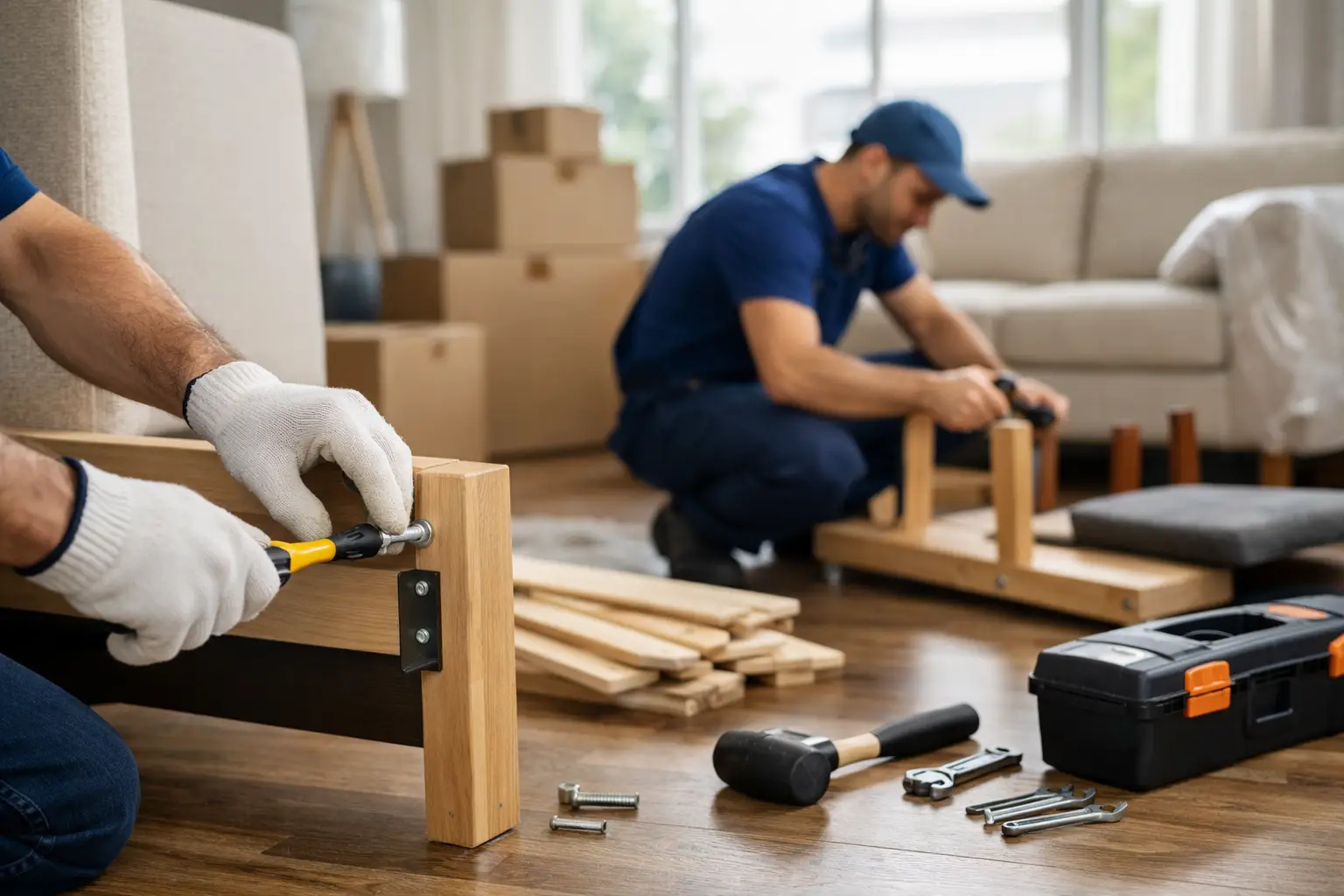
A wardrobe that will not clear the landing, a king-size bed frame and a dining table that is too wide for the front door can quickly turn moving day into a problem. So, do movers dismantle furniture? Often, yes – but the exact service depends on the item, the access at each property and what has been agreed as part of your removal quote.
A professional removal team will assess large or awkward furniture before the move and plan the safest way to get it out. In many cases, carefully dismantling and reassembling furniture is the sensible option. It protects your belongings, reduces the risk of damage to walls and doorframes, and helps the move stay on schedule.
Do movers dismantle furniture as standard?
Many removals companies can dismantle common household furniture, but it should never be assumed that every item is included automatically. Some firms offer a transport-only service, while others include basic dismantling within a full removals package. Complex items may require extra time, specialist tools or a separate arrangement.
The best time to establish what is covered is during the survey or when requesting a quote. Tell the removals company about anything that may need taking apart at both ends of the move. Photographs and dimensions are useful, especially for furniture in tight rooms, loft conversions or flats with narrow staircases.
At Phoenix Rising Removals and Storage, the move is planned around the property, access and the items being moved. Raising furniture requirements early gives the team the information needed to allocate suitable staff, equipment and vehicle space.
Furniture movers commonly dismantle
Most removal teams can deal with straightforward, freestanding furniture that is designed to be assembled and taken apart. This commonly includes bed frames, wardrobes, dining tables, desks, shelving units, bookcases and certain sofa systems.
Beds are one of the most frequent examples. Taking down a bed frame can make it much safer to carry through corridors and downstairs, while reassembling it at the new property means you are not left searching for screws at the end of a long day. Large wardrobes and dining tables are also regularly dismantled where access makes this necessary.
That said, dismantling is not always the right answer. A solid wooden table may travel better intact if there is clear access. A well-built chest of drawers may be safer wrapped and carried as one piece. Experienced movers will balance the need for access against the risk of weakening or marking the furniture.
Items that may need specialist help
Some items sit outside normal furniture dismantling. These should be discussed in advance rather than left until the removal team arrives.
Built-in wardrobes, fitted kitchens and wall-mounted units are usually fixtures rather than moveable furniture. Removing them can affect walls, flooring, electrics or the condition of the property, so this work may need a qualified tradesperson. Appliances connected to gas, plumbing or hard-wired electrics should also be disconnected by an appropriate professional before the removal team attends.
Certain specialist items need particular care. Examples include pianos, large safes, gym equipment, antique furniture, pool tables and bespoke cabinetry. They may require additional manpower, specialist lifting equipment or a technician familiar with how the item is constructed.
Flat-pack furniture deserves an honest assessment too. Some units can be dismantled successfully; others, particularly older or lower-cost pieces, may not withstand being taken apart a second time. If joints are loose, panels are swollen or fittings have been repaired before, the safest choice may be to move the item whole where possible. If that is not possible, replacement can sometimes be more practical than risking a failed reassembly.
Why the survey matters
A removal survey is not simply about counting boxes. It allows the team to identify access challenges and decide whether dismantling is required before moving day. They will consider the width of doorways, staircase turns, lift size, parking arrangements and the distance from the property to the lorry.
The new address matters just as much as the old one. A wardrobe may be easy to remove from a ground-floor house but impossible to carry up a narrow stairwell at the destination without being taken apart. Mention any restricted access, permit-controlled parking, upper-floor flats or unusual entrances when arranging your move.
A clear survey also helps avoid unexpected charges or delays. If the team arrives without knowing that several large items need dismantling, the work may take longer than the booked slot allows. Giving full details enables a realistic quote and a properly organised move.
How to prepare furniture before the movers arrive
Even when movers are handling dismantling, there are a few simple steps that make their work safer and quicker. Empty wardrobes, drawers, desks and cupboards unless your removals company has confirmed otherwise. Loose contents add weight, can shift while being carried and may damage the furniture from inside.
Keep important fittings together. If you have instruction manuals, spare bolts or special tools for a piece of furniture, place them somewhere obvious and tell the team where they are. For items dismantled by movers, screws and fittings should be bagged, labelled and kept securely with the relevant furniture wherever possible.
Remove personal items from display cabinets and take fragile shelves, lamps and ornaments out of the way. Clear a route from each large item to the exit, including shoes, children’s toys and low tables that can create a trip hazard. If furniture is being moved from a garage, shed or loft, make sure the route is safely accessible before the team arrives.
Ask these questions when booking
To avoid uncertainty, confirm the practical details before accepting your quote. Useful questions include:
- Which specific items will be dismantled and reassembled?
- Is dismantling included in the quoted price, or charged separately?
- Can the team move the item whole if it proves safe to do so?
- Are there items the company cannot dismantle, disconnect or reconnect?
- Will fittings be retained and labelled during the move?
- Is reassembly available at the destination on the same day?
These questions are especially useful if you are combining removals with packing or storage. Furniture going into storage may need different preparation, including protective wrapping and a clear record of which fittings belong to each item. If it will stay in storage for some time, retain copies of assembly instructions separately so they are easy to find later.
Dismantling for office and commercial moves
For business relocations, dismantling often involves desks, workstations, shelving, meeting tables and non-fixed storage units. The objective is not just to get items into the new premises, but to keep the relocation orderly enough for the business to resume work promptly.
Office furniture should be labelled by room, department or workstation before it is taken down. This prevents desks being reassembled in the wrong area and helps avoid missing components. IT equipment needs its own plan: removal staff can transport carefully packed equipment, but disconnection, data protection and reconnection should be managed by the appropriate IT provider or trained staff.
Commercial moves may also have building rules on lift bookings, loading bays and working hours. Planning dismantling around these restrictions is often what keeps an office move efficient rather than disruptive.
Careful handling does not stop at reassembly
A good removals service treats dismantling as one part of protecting your furniture. The item should be wrapped appropriately, loaded securely and placed in the correct room at the destination. Reassembly also needs a final check so the frame is stable, doors align properly and no fittings have been left behind.
If you have a valuable, sentimental or unusually constructed item, say so. A short conversation before the move can determine whether it should be moved intact, dismantled by a specialist, or packed with added protection. Honest planning is always preferable to rushing a difficult item through a doorway on the day.
The simplest approach is to make a list of every large item you are unsure about and discuss it when arranging your removal. With the right information in advance, your movers can arrive prepared, protect your furniture properly and leave you with a home that is ready to settle into.