
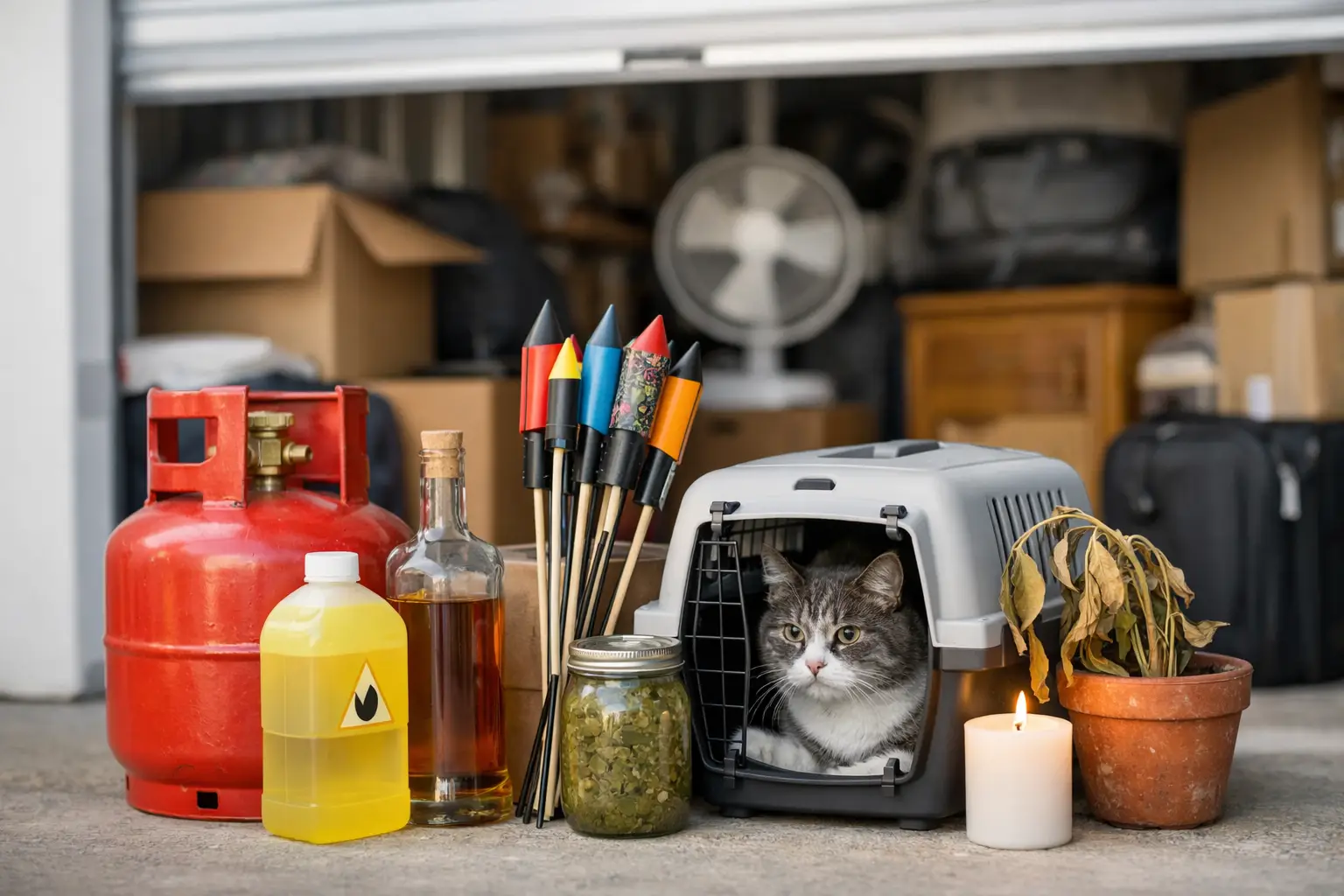
A storage unit can solve a lot of moving problems, but it is not a place for absolutely everything. One of the most common questions we hear is what items cannot go in storage, especially when people are packing in a hurry and trying to make space before moving day.
The short answer is that anything hazardous, perishable, illegal or likely to cause damage should stay out. The longer answer matters more, because some items seem harmless at first glance but can create safety risks, attract pests, spoil, leak or invalidate your insurance if they are packed away anyway.
What items cannot go in storage – the main rule
As a general rule, storage is designed for dry, stable household and business belongings such as furniture, boxed possessions, documents, stock and equipment. It is not designed for items that can rot, explode, corrode, contaminate other goods or put people at risk.
That means restrictions usually fall into a few clear groups. If an item is flammable, toxic, living, perishable or unlawful to possess, it should not go into storage. Some facilities also place limits on high-value goods, batteries, fuel-powered equipment and anything that could create odours or moisture.
This is not just a matter of policy. It protects your items, other customers’ belongings and the building itself.
Hazardous and flammable items should stay out
This is the biggest category, and it catches more people out than you might expect. Paint tins, petrol, paraffin, petrol cylinders, fireworks, solvents, adhesives, oil, cleaning chemicals and certain aerosols are all common examples.
Many of these products are perfectly normal to keep at home in small quantities, but a storage environment is different. Containers can degrade over time, temperatures can vary, and one leaking or unstable item can quickly affect everything around it. Even a partly used fuel canister tucked in with garage tools can become a serious problem.
If you are preparing garden equipment or machinery for storage, check it carefully. Lawn mowers, strimmers and similar petrol-powered items often need to be fully drained before they can be considered safe. In some cases, they should not go into storage at all unless the facility has confirmed its policy.
Lithium batteries deserve special mention as well. Power tool batteries, spare e-bike batteries and battery packs can present a fire risk if damaged, poorly packed or stored for long periods in the wrong conditions. It is always better to ask before assuming they are fine.
Perishable food and anything that can spoil
Food should not be placed into storage unless it is a very specific specialist arrangement, which standard household storage is not. That includes obvious items such as fresh food, frozen food and refrigerated goods, but also dry goods like flour, cereal, pasta, pet food and tinned products in many cases.
The issue is not only spoilage. Food attracts insects and rodents, creates smells, and can lead to contamination far beyond one box. A bag of rice or a half-forgotten tin hamper may seem harmless during packing, but in storage it can become the start of a much bigger problem.
The same principle applies to other organic materials that deteriorate quickly. Some natural products, damp textiles or improperly cleaned kitchen items can also create mould, mildew and odours if packed away without care.
Living things are never suitable for storage
Plants, pets and any other living things should never be put into storage, even temporarily. This may sound obvious, but house moves can be stressful, and people do occasionally wonder whether a plant can be left in a unit for a few days while they sort out access to a new property.
It should not. Storage units are not controlled living environments. Plants will suffer from lack of light, air circulation and suitable temperature, while animals must never be left in any unattended storage space under any circumstances.
If you are moving with houseplants, keep them with you and transport them separately with ventilation and temperature in mind.
Illegal, stolen or unsafe goods are prohibited
Anything illegal is automatically unsuitable for storage. That includes stolen items, counterfeit goods, unlicensed weapons, prohibited substances and any possession that breaches the law.
Reputable storage providers will also restrict items that create a clear security risk, even if ownership itself is not unlawful. Firearms, ammunition and certain bladed items may be subject to strict legal and policy controls. If you own something regulated, do not guess. Check the legal requirements and the storage provider’s position first.
Damp, dirty or infested items can damage everything else
Not every prohibited item is dramatic. Sometimes the biggest risk comes from things that are simply not clean, dry or stable enough to be packed away.
A fridge that has not been defrosted and dried properly can develop mould. Garden furniture put away wet can create mildew. A carpet that still holds moisture after cleaning can affect nearby boxes and soft furnishings. Items with signs of insects, moths or other infestation should also be kept out until they have been treated properly.
This is where good preparation matters. Something may not be banned in itself, but if it is dirty, damp or likely to spread damage, it should not go into storage in that condition.
High-value items may need special consideration
Jewellery, cash, precious metals, rare collectibles and important personal documents are not always outright banned, but they are often better kept elsewhere. Some storage providers place limits on what can be stored, and insurance cover may exclude or restrict very high-value items unless they have been declared and agreed in advance.
The practical point is simple: if losing an item would cause serious financial or personal difficulty, do not assume a standard storage arrangement is the best place for it. Passports, wills, financial records and irreplaceable keepsakes are often safer under your direct control or in a more specialised facility.
This is one of those areas where the answer depends on the item, the value and the terms of cover. It is always worth checking before packing.
Medicines and temperature-sensitive items
Most medicines should not go into storage unless storage conditions are known to meet the product’s requirements. Many need to be kept within a stable temperature range, away from heat, cold or humidity.
The same applies to certain cosmetics, supplements, medical supplies and sensitive electronics. Even if they are not technically prohibited, they may not cope well with long-term storage. Adhesives can separate, components can degrade and expiry dates can become an issue.
If an item needs consistent environmental control to remain safe or usable, a general storage unit may not be the right fit.
What items cannot go in storage if you are moving house?
When people ask what items cannot go in storage during a house move, the most common culprits are garage products, food cupboards and overlooked utility items. It is easy to focus on furniture and boxes while forgetting the shed, under-stairs cupboard or cleaning supplies under the sink.
Before your move, it helps to sort by room and be especially careful with kitchens, bathrooms, utility spaces, lofts and garages. These are the places where restricted items usually hide. Open every cupboard, check every toolbox and do not pack anything unidentified into a sealed box just because time is tight.
If you are using a removals team alongside storage, it also helps to flag anything you are unsure about early. An experienced company can often spot problem items before they reach the vehicle.
Safer alternatives for restricted items
Not everything that cannot go into storage needs to be thrown away, but it does need the right plan. Food should usually be used up, donated if suitable, or disposed of before moving. Hazardous household products may need to go to a local household waste or recycling centre, depending on the material.
Fuel and chemicals should be handled according to local authority guidance. Important documents and valuables are usually best kept with you. Plants should travel separately and be unpacked promptly. Medicines should remain accessible and stored according to their instructions.
Where an item is valuable but sensitive, ask whether specialist storage or declared insurance arrangements are available rather than making assumptions.
A quick check before anything goes into storage
A simple test can save a lot of trouble. Ask whether the item can leak, spoil, smell, burn, corrode, attract pests or break the law. If the answer is yes, it should not go in.
Then ask whether the item is clean, dry and properly packed, and whether you would be comfortable leaving it untouched for the full storage period. If not, it may need more preparation or a different solution.
At Phoenix Rising Removals and Storage, we find that clear guidance at the packing stage prevents most storage problems before they begin. A little extra care before move day is far easier than dealing with damage afterwards.
If you are ever unsure, do not force the decision while packing under pressure. Ask the question, check the policy, and keep anything uncertain aside until you know it is safe. That one pause can protect the rest of your belongings and make the whole move feel far more manageable.