
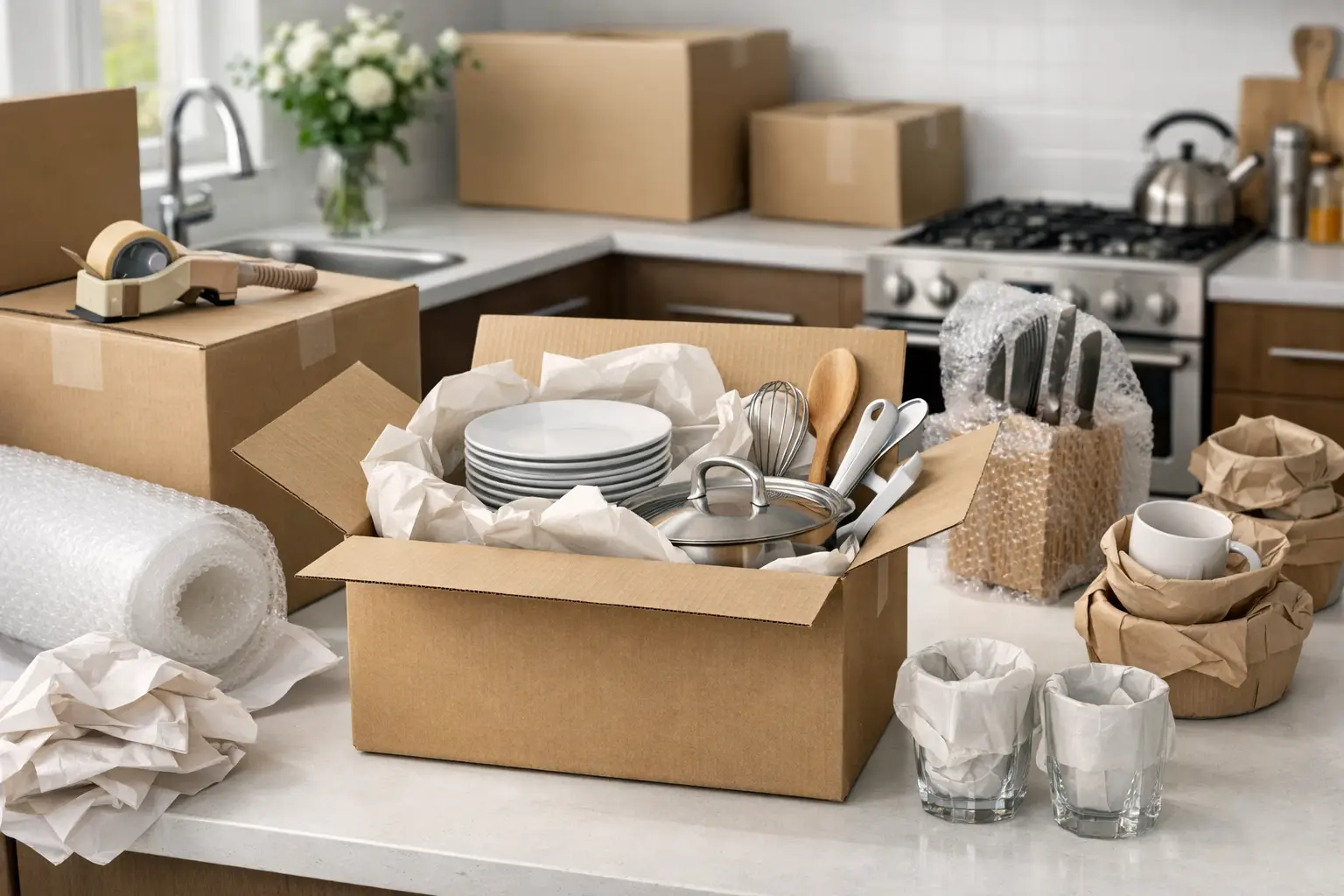
The kitchen usually looks manageable until you open the first cupboard. Then it becomes obvious why packing the kitchen for a house move is one of the jobs people put off the longest. It is not just the number of items. It is the mix of fragile glassware, heavy pans, awkward appliances, loose cutlery and half-used food that makes the kitchen one of the trickiest rooms to pack well.
A rushed approach often leads to broken crockery, leaking bottles and boxes that are far too heavy to lift safely. A better approach is to pack the kitchen in stages, starting earlier than you think you need to. That gives you time to sort what is worth moving, use up what you can and protect the items you rely on every day.
Why packing the kitchen for a house move needs a plan
Kitchens are dense. A small number of boxes can become surprisingly heavy, especially once you start filling them with plates, tins and cookware. Unlike clothes or bedding, kitchen items also vary in shape and fragility, so there is no single packing method that works for everything.
That is why planning matters. You need the right box sizes, enough wrapping material and a clear idea of what should be packed first and what must stay out until moving day. If you leave all of it until the last evening, you are far more likely to overpack boxes, forget essential items and damage the things you use most.
Start by reducing what you need to move
Before a single box is taped up, take a proper look at what is in your kitchen. Most households have duplicate utensils, chipped mugs, unused gadgets and food items that should not have survived the last cupboard clear-out. Moving home is a good point to be honest about what you actually use.
Sort items into four groups – keep, donate, recycle and bin. This is especially useful with plastic containers missing lids, old spices, expired food and novelty appliances that have not left the cupboard in years. Less clutter means fewer boxes, lower risk of damage and less to unpack at the other end.
It also helps to plan meals around what is already in the freezer, fridge and cupboards in the week before the move. The less perishable food you have left, the easier moving day becomes.
Use the right packing materials
Kitchen packing goes more smoothly when you use materials suited to the weight and fragility of the contents. Small and medium double-walled boxes are usually a better choice than large boxes, because they stop you from making cartons too heavy to carry. Packing paper is useful for wrapping plates and glassware cleanly, while bubble wrap can help with delicate or high-value items.
You will also need strong tape, labels and marker pens. Dividers can be helpful for glasses and mugs, though they are not essential if items are wrapped properly. For knives, appliance parts and anything with sharp edges, a little extra protection is worth the effort.
Good materials do not just protect your belongings. They also make loading and unloading safer, because boxes keep their shape and are easier to stack in the vehicle.
Pack in zones, not in a panic
The simplest way to tackle a kitchen is to work by category. Begin with the things you use least often, such as serving dishes, baking trays, spare glassware and seasonal items. Leave your everyday plates, cutlery, kettle and a few cooking basics until last.
Packing in zones also helps with unpacking. If one box contains baking items and another holds mugs and tea supplies, you will know exactly where to start when you arrive. A box marked simply “kitchen” is far less helpful when you are looking for the scissors or the cafetiere after a long day.
How to pack plates, bowls and glassware
Crockery and glassware need careful wrapping, but they do not need complicated methods. Plates are best wrapped individually in packing paper and stacked on their edge inside the box rather than laid flat. This reduces pressure and lowers the chance of breakage in transit. Bowls can be wrapped one by one and nested carefully, with paper between each layer.
Glasses and mugs should also be wrapped individually, with particular attention paid to stems, handles and rims. Fill hollow items lightly with paper to support them, then place them upright in the box. Avoid leaving gaps. If there is movement inside the carton, add scrunched paper around the sides and top so everything stays in place.
Boxes containing fragile kitchenware should be clearly labelled, but they still need to be packed properly. A label helps, though it is not a substitute for good wrapping.
Pots, pans and heavier kitchen items
Pans, baking dishes and casserole pots are less delicate, but they can create weight problems quickly. Keep these boxes small. A few heavy items in one box are enough. If you add tins, bottles or small appliances as well, the carton can become difficult to handle and more likely to split.
Lids should be wrapped separately or secured so they do not move around and chip other items. If cookware is expensive or has non-stick surfaces you want to protect, place paper or cloth between stacked pieces to prevent scratches.
For metal utensils and cutlery, bundle similar items together. Sharp knives need particular care. Wrap each blade securely and store knives so they cannot cut through the box or injure whoever opens it.
Appliances need more than a quick unplug
Small kitchen appliances often get packed late, but they should be prepared properly. Clean and dry toasters, blenders, coffee machines and air fryers before boxing them. Crumbs, moisture and loose parts can all cause problems if left inside during transit or storage.
Where possible, remove detachable parts, wrap them separately and keep cords neatly tied. If you still have the original box and inserts for a more expensive appliance, that is often the safest option. If not, use a sturdy carton with plenty of padding around the item.
Fridge freezers need extra planning. They should be emptied, defrosted and dried in advance, following the manufacturer’s guidance. This is one area where timing matters, especially if your moving schedule is tight.
Food, liquids and cleaning products
Open food packets, oils, sauces and cleaning products are often the most awkward part of kitchen packing. They can leak, smell or attract damage if packed loosely. If you are transporting unopened dry goods, group them together and keep them upright where possible. Open packets should be sealed properly or used up before the move.
Liquids need special care. Tighten lids, place bottles in sealed bags and keep them upright in a separate box. It is usually sensible not to mix food items and cleaning products in the same carton.
There is also a practical judgement to make here. Some low-value, half-used items are more trouble to move than to replace. That depends on distance, budget and how much time you have, but it is often worth being selective.
Keep an essentials box back
One of the most useful steps is setting aside a kitchen essentials box for the first 24 hours in your new home. This should travel with you or be loaded last so it is easy to reach. Include the basics you will want straight away: kettle, mugs, tea or coffee, a few plates and bowls, cutlery, washing-up liquid, a tea towel, bin bags and any medication or pet items usually stored in the kitchen.
If you are moving with children, adding snacks and simple meal supplies can make the first evening much easier. The aim is not to pack a full temporary kitchen. It is to avoid opening six boxes just to make a drink.
When professional packing support makes sense
Some people prefer to pack their own kitchen, while others would rather leave it to experienced movers. It depends on your timescale, the size of the move and how comfortable you feel handling fragile items. If you have a large family kitchen, a tight completion window or valuable crockery and appliances, professional packing can save a great deal of stress.
A removals team with proper materials and experience will know how to balance protection with efficiency, and how to pack boxes safely for transport. For many households, that reassurance is worth it, particularly when the move already involves enough other pressures. Phoenix Rising Removals and Storage supports customers with both removals and packing, which can be especially helpful when the kitchen feels like the room you are least likely to finish on time.
Label for the home you are moving into
Clear labelling is one of the simplest ways to make your kitchen easier to unpack. Mark each box with the room, the general contents and whether it is fragile or heavy. You can be more specific than that if useful – glasses, pans, baking, food cupboard – but keep it readable.
It also helps to think ahead to your new layout. If the new kitchen is smaller, you may want some less-used items to go straight into storage rather than filling cupboards you need for everyday essentials. Packing with that in mind saves time later.
A well-packed kitchen is not about perfection. It is about making moving day safer, reducing avoidable breakages and giving yourself a simpler start in your new home. If you tackle it early, use sensible box weights and pack by category, the room that often causes the most stress becomes much more manageable. A calm kitchen clear-out today usually means a far better first cup of tea tomorrow.