
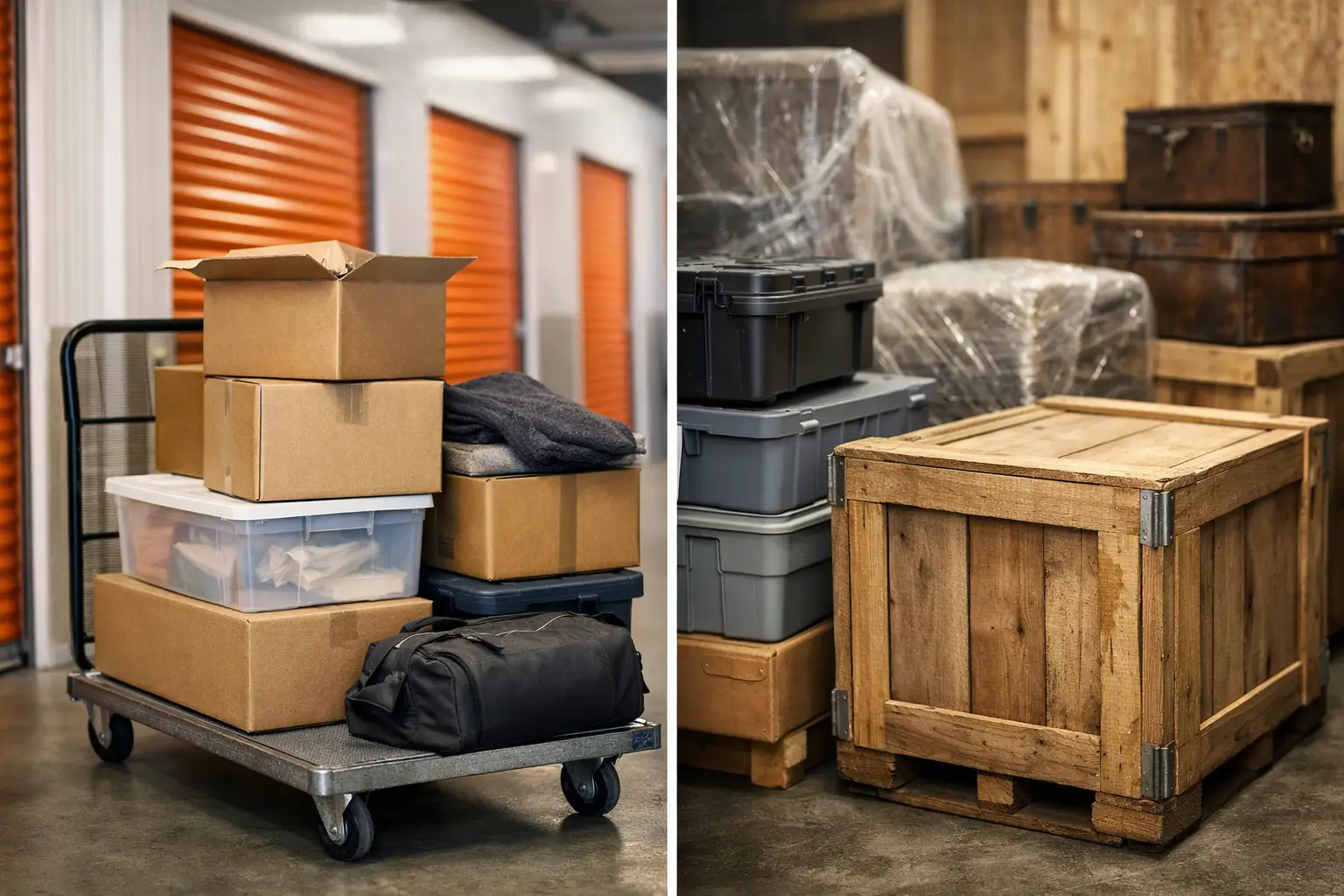
A completion date changes, your new home needs work, or an office lease ends before the next premises are ready. These are the moments when short term vs long term storage becomes a practical decision rather than an afterthought. The right choice can take pressure out of a move, protect your belongings and give you time to make decisions without filling every spare room with boxes.
Storage is not one-size-fits-all. The best option depends on how long you expect to store, what you are keeping, how often you may need access and whether your plans are genuinely fixed. Understanding the difference before moving day helps you book suitable space, pack properly and avoid paying for a solution that does not fit your circumstances.
Short Term vs Long Term Storage: The Main Difference
Short-term storage is designed for a temporary gap. This could be a few days, several weeks or a few months while a property chain settles, renovation work is completed or you wait for a new tenancy to begin. It is especially useful when moving dates do not line up neatly, which is common with house moves.
Long-term storage is better suited to belongings you do not expect to need for an extended period. Examples include furniture kept during a move abroad, household contents held while a property is rented out, archived business items or possessions retained while downsizing. There is no universal cut-off point, but the key difference is intent: short-term storage supports an active transition, while long-term storage protects items you are setting aside.
A good storage arrangement should be flexible enough to cope with changing plans. A sale can be delayed, building work can overrun and a temporary arrangement can quickly become a longer one. Before committing, ask how easily your storage period can be extended or adjusted.
When Short-Term Storage Makes Sense
Short-term storage is often part of a well-managed move rather than a sign that something has gone wrong. It creates breathing room when timings are tight and prevents belongings being moved more than necessary.
For homeowners, the most common reason is a gap between completion dates. You may need to leave your current property before your purchase is ready, or you may be moving into temporary accommodation. Storing your furniture and boxes securely means you can stay with family, rent a smaller flat or travel without trying to accommodate a full household at the same time.
It is also useful during renovation work. Keeping furniture away from dust, paint, tradespeople and restricted access can make the project easier to manage. Rather than shifting heavy items from room to room, you can clear the space properly and bring belongings back once the work is finished.
Businesses often use short-term storage during an office relocation. Desks, filing, stock or equipment can be held safely while the new space is prepared. This can reduce disruption and allow the move to be planned around trading hours rather than rushed into a single day.
Short-term storage may cost more per week than a longer commitment, but it offers flexibility. If you are reasonably confident that you will need your belongings soon, that flexibility can be worth far more than a lower rate tied to a period you may not need.
When Long-Term Storage Is the Better Choice
Long-term storage is a sensible option when keeping possessions is more practical than replacing them, but there is no immediate place for them. It gives you time to make a considered decision rather than disposing of furniture, family items or business equipment in a hurry.
A family moving abroad may wish to retain furniture and personal possessions until they know whether the move will be permanent. Someone downsizing after many years in one home may need time to sort through sentimental items without making difficult choices during an already demanding move. Landlords and property owners can also use storage while preparing a home for sale or letting.
For businesses, long-term storage can help retain records, surplus furniture, seasonal displays or equipment that is needed occasionally but takes up valuable workspace. The practical question is whether the item is likely to be used again and whether its replacement cost, value or importance justifies storage charges over time.
Long-term storage works best when items are packed with durability in mind. A box that survives a short journey may not be suitable for many months of stacking. Proper cartons, protective wrapping and clear labelling matter more when you will not be opening the unit regularly.
Costs, Access and Security: What to Compare
Price is naturally a major consideration, but it should not be the only one. A cheap arrangement can become inconvenient or unsuitable if access is difficult, the space is poorly managed or your items are not packed for the conditions.
When comparing options, consider these four points:
- Length of stay: Ask whether rates change after a certain period and whether there is a minimum term or notice requirement.
- Access needs: If you may need to collect documents, seasonal items or stock, establish how and when access is arranged.
- Space required: Avoid paying for unused capacity, but leave enough room for safe stacking and sensible loading.
- Protection: Check that storage is secure, dry and suitable for household or business belongings, with appropriate insurance arrangements understood.
Access is particularly relevant in the short term. If you are between homes, you may need a few essentials before the rest of your belongings are delivered. In long-term storage, regular access is less likely to be necessary, so efficient packing and a detailed inventory become more valuable.
Security should be treated as a basic requirement, not an optional extra. Your belongings should be handled carefully during collection, loading and storage, then kept in a secure environment until they are needed again. If you are storing high-value, fragile or business-critical items, tell your removals and storage provider from the outset so the right handling can be arranged.
Packing Differently for Each Storage Period
Whether storage is short or long term, good packing protects your belongings and makes collection easier. The difference is that long-term storage requires more preparation for items remaining untouched.
Start by cleaning and drying everything. Moisture, crumbs and dirt can cause avoidable problems over time. Empty drawers where appropriate, defrost and dry appliances, and avoid placing damp textiles or garden equipment into storage. Use strong boxes that can be stacked, keep heavier items at the bottom and avoid overfilling cartons until they split or become unsafe to lift.
For short-term storage, label boxes by room and mark anything you may need quickly, such as kitchen essentials, children’s items, paperwork or work equipment. Keep those cartons together so they can be identified without unpacking everything.
For long-term storage, make a fuller inventory. Number your boxes and note their contents in a separate document. Wrap fragile items individually, protect furniture with suitable covers and do not store valuable documents, medicines, food, flammable materials or anything that may deteriorate in unsuitable conditions. If possible, place items you are most likely to need near the front.
Professional packing can be a worthwhile choice where time is limited or belongings are particularly fragile. It helps ensure that china, glassware, artwork, electronics and bulky furniture are prepared correctly before storage, reducing the risk of damage during handling and while stacked.
Questions to Ask Before You Book
Before arranging storage, be realistic about the uncertainty in your plans. If your moving date is only an estimate, choose an option that can accommodate an extension. If you are decluttering before a sale, decide whether you will need items returned in stages or all at once. For a business move, identify any equipment that must remain available so operations can continue.
You should also confirm how collection and redelivery will work. Storage is most useful when it fits around the rest of the move. A removals company that can pack, collect, store and redeliver can reduce the number of handovers and the amount of organising required from you.
For households and businesses across southern England, Phoenix Rising Removals and Storage can help coordinate storage with the wider removal plan, whether you need a brief holding period or a longer secure arrangement. The aim is to keep your belongings protected while making the next stage of your move easier to manage.
Choose the storage period that reflects what you know now, but leave room for plans to change. With clear labelling, careful packing and a provider you trust, storage can turn an awkward gap in your move into time you can use confidently.