
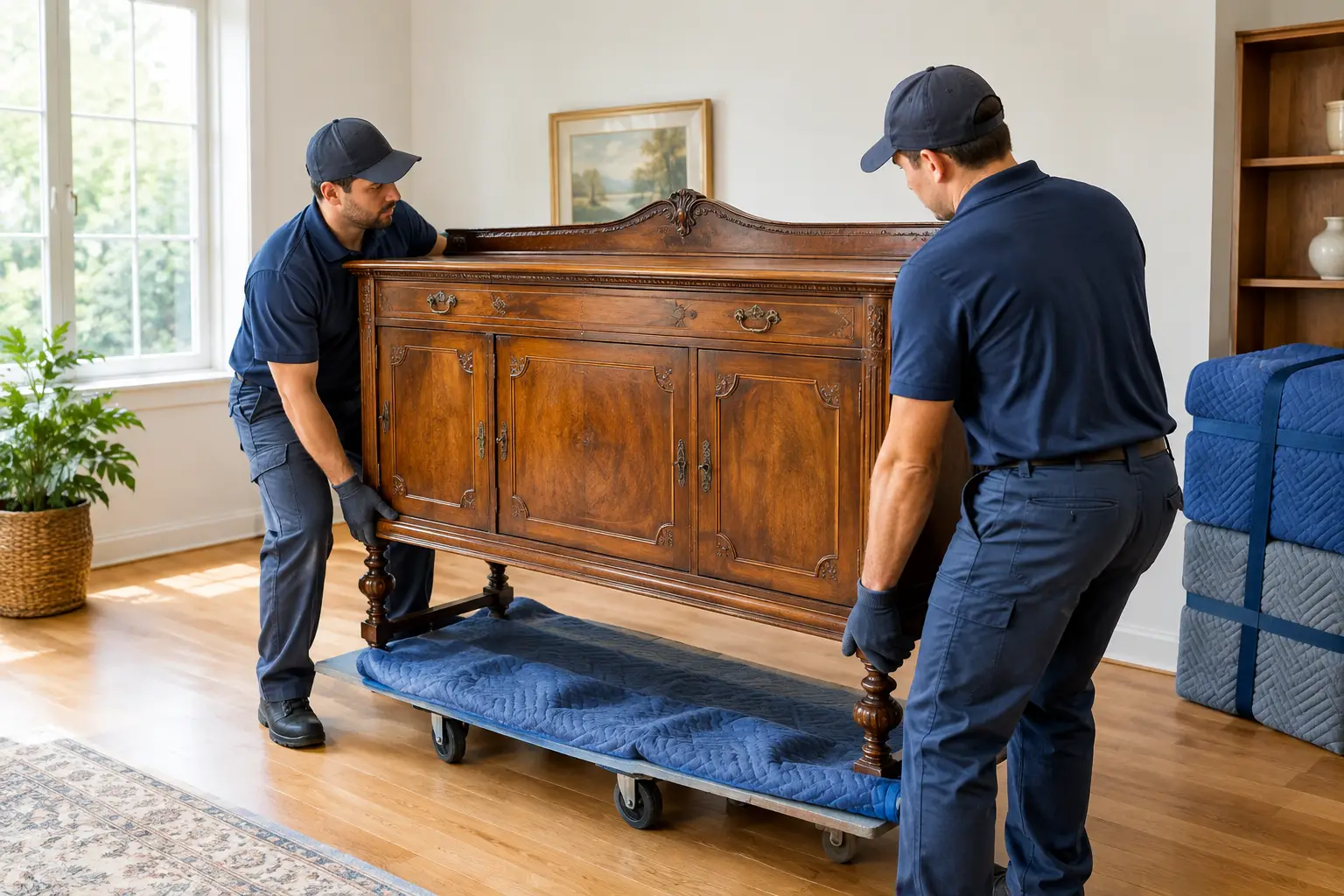
A Victorian chest of drawers may look solid enough to withstand anything, but age can weaken joints, dry out veneers and make a short journey far riskier than it appears. This antique furniture transport guide is designed to help you prepare valuable, inherited and much-loved pieces for a move without treating them like ordinary household furniture.
Antique furniture needs a different approach because its value is not only financial. Original finishes, hand-cut joints, delicate marquetry and signs of age all contribute to its character. Good preparation protects those details while making the move safer for everyone involved.
Start with a condition check
Before anything is wrapped or lifted, inspect each item carefully. Look beneath tables, inside drawers and behind cabinets for loose legs, cracked rails, lifting veneer, woodworm damage or old repairs. A piece that has stood safely in one room for decades may not tolerate twisting, vibration or being lifted from the wrong point.
Take clear photographs from several angles, including existing marks and any fragile areas. This creates a useful record of condition before the move and helps movers understand where extra care is needed. If an item has a known weakness, point it out during the survey rather than hoping it will be obvious on moving day.
Decide what can be dismantled
Some antique furniture can be partly dismantled, but this should never be the default. Modern flat-pack furniture is designed to come apart; antique pieces often are not. Removing original fittings, screws or glued sections can cause damage, make reassembly difficult or reduce the item’s integrity.
It may be sensible to remove loose shelves, detachable mirrors, marble tops or glass panels where this can be done safely. Keep fittings in labelled bags and avoid placing adhesive tape directly on wood, polish, veneer or gilding. If there is any doubt, leave the item intact and plan the handling around its size and shape.
Measure the whole route
Measure the furniture, then measure the route it must take. Door frames, stair turns, low ceilings, tight landings, garden gates and lift dimensions all matter. A large wardrobe may fit through a doorway but not make the turn immediately beyond it.
Planning the route early avoids rushed decisions on the day. In some properties, a different exit, temporary removal of a door, or a specialist lifting solution may be safer than forcing an awkward item through a narrow space. Your removal company should be told about access restrictions before the move is booked.
Antique furniture transport guide: packing with care
The goal of packing is to protect the surface, prevent movement and avoid trapping moisture against the furniture. Wrapping an antique too tightly in plastic can be problematic, especially if it will be stored or transported through changes in temperature. Breathable protective materials are generally a better first layer for timber and upholstery.
Start by dusting the piece gently so grit cannot rub against the finish during transit. Cover vulnerable corners, carved details and feet with soft padding. Use furniture blankets or padded covers over that protective layer, securing them carefully without tape touching the furniture itself. Cardboard corner protectors can help on straight edges, provided they do not press into fragile veneer.
Drawers should usually be emptied. Their contents add weight and can shift during carrying, putting stress on runners and joints. Once empty, drawers may be secured closed with a soft, non-adhesive restraint around the whole item, or removed and carried separately if this does not compromise the structure. Never rely on old locks to hold drawers or doors shut.
For glass-fronted cabinets, mirrors and display cases, internal shelves and loose glass should be removed where possible. Wrap glass separately, mark it clearly and keep it upright during transport. A framed mirror may need a purpose-made mirror carton or a rigid protective casing, particularly if it has an original or ornate frame.
Upholstered antiques need protection from dirt and moisture as well as tears. A clean fabric cover beneath a padded blanket is often appropriate. Take particular care with buttoned backs, exposed wooden arms and delicate castors, which can catch on covers or flooring.
Safe lifting and loading
Many antiques are damaged before they reach the vehicle. Pulling a chest by its handles, lifting a chair by its arms or dragging a table across a floor can loosen joints that may already be under strain. The safest lifting points are normally the strongest structural areas, such as the lower frame or main carcass, but every piece is different.
Use enough people for the size, weight and awkwardness of the item. A heavy dining table may require several handlers even after its top has been protected. Keep it upright unless its construction makes another position safer, and never stack heavy items on top of antique furniture in the vehicle.
A purpose-built removals lorry should have clean padded blankets, securing straps and sufficient space to load furniture without crushing it against other belongings. Items must be secured so they cannot slide, tip or rub during braking and cornering. This is especially important on longer UK moves, where vibration over many miles can loosen padding or expose a weak point.
Loading order matters. Larger, sturdier furniture can form a stable base, but antiques should not simply be treated as load-bearing pieces. A delicate sideboard may need its own protected position, away from sharp edges, machinery, boxes or anything likely to move against it.
Consider temperature, weather and storage
Wood reacts to rapid changes in temperature and humidity. Rain is an obvious concern, but a damp blanket or a prolonged wait outside can also affect finishes, veneers and joints. On a wet day, the team should minimise the time each item spends outdoors and use dry, clean protective covers.
If there is a gap between moving out and moving in, choose storage that is secure, dry and suitable for furniture. Avoid leaving antiques in a garage, shed or damp outbuilding unless conditions are consistently dry and stable. Storage is often useful during a delayed completion or renovation, but it should be planned as part of the move rather than arranged at the last minute.
When furniture comes out of storage, allow it to settle gradually in its new home. Do not place valuable timber pieces immediately beside a radiator, fireplace or in direct sunlight. A few days of sensible positioning can help prevent unnecessary movement in the wood.
When professional handling is the sensible choice
A small, sturdy antique chair may be manageable with careful packing, but larger or more fragile items usually benefit from professional handling. This is particularly true for pianos, grandfather clocks, large mirrors, glazed cabinets, marble-topped tables and furniture with severe access challenges.
Ask a removals company how it will assess the item, protect it, load it and insure the move. Be clear about approximate age, value and any known damage. The cheapest quote is not always the best value if it does not include suitable materials, trained handling or proper cover for the work being carried out.
Phoenix Rising Removals and Storage can plan antique furniture moves as part of a full house removal, including professional packing, careful loading and secure storage where required. A pre-move survey gives the team a chance to understand access, identify fragile items and make sure the right vehicle and equipment are allocated.
On moving day
Keep a clear path from the room to the vehicle and remove loose rugs, trailing cables and obstacles from stairs and hallways. Tell the team which items need special attention and keep photographs or condition notes available if useful. Once the furniture is in its new room, resist the temptation to slide it across the floor. Lift or use suitable floor protection instead.
After unpacking, check that doors, drawers and legs operate as they did before. Minor movement in old timber can happen, particularly after a long journey, but any concern is easier to address when it is noticed promptly. With sound preparation and patient handling, your antiques can arrive ready to continue their story in a new home.